

pirate flag
 1
3.7
1
3.7

- noun
- /ˈpaɪrɪt flæɡ/
- The ship hoisted the pirate flag to announce its presence on the open sea.
- fly the pirate flag
Examples
-
On the mast, a black pirate flag flies just above the American one.
Fiction book (2000) -
You believed that, you wouldn't still have this pirate flag on your wall.
-
And then I put a pirate flag there.
-
Going to feel even better when you raise that pirate flag and tell the world we have a way to beat 'em.
-
- If I squint, it looks like a pirate flag.
-
A pirate flag.
-
I intend to see to it that any man who sails under a pirate flag or wears a pirate brand gets what he deserves:
-
Other Caribbean pirate flags had images of cutlasses or bleeding hearts—all designed to terrify potential victims into surrendering without a fight.
Academic text (2009) -
As they approached the enemy ship, the crew raised the pirate flag to intimidate their foes.
-
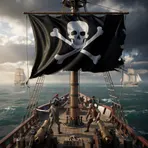
I could see the pirate flag fluttering proudly atop the mast, its white skull and crossbones clear against the sky.
Synonyms
 2
8.1
2
8.1
A black flag with a white skull and crossbones flown by pirates to show they will attack
 1
6.5
1
6.5
A flag that is black with a white skull and crossbones used by pirates


 1
9.4
1
9.4
A black flag with a white skull and crossbones used by pirates
Surface Forms
Morphology
The meaning 'a flag used to identify a pirate ship' is directly and transparently composed from 'pirate' (type of person) + 'flag' (a piece of cloth emblem); it follows the common noun+noun modification pattern where the first noun specifies the kind of the second. This compositional pattern is cross-linguistically common and should be immediately clear to a B1 learner who knows both constituent words.
Etymology
The noun pirate flag comes from the black flag with a white skull and crossbones called the 'Jolly Roger' that pirates flew to frighten other ships and make them give up. So today the pirate flag means a flag used to show a pirate ship or danger.