
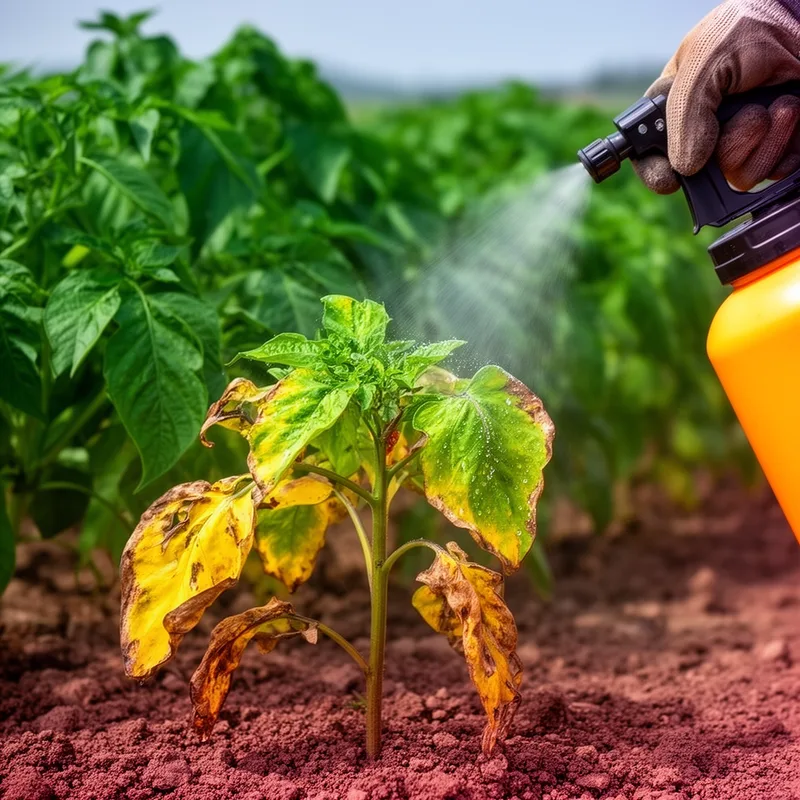
phytotoxicity


 1
9.9
- noun
- /faɪtəˈtɒksɪti/
- Specialized
- Farmers must be cautious about herbicide phytotoxicity to avoid damaging their crops.
- show phytotoxicity
Examples
-
The main concern was making sure the borate levels were diluted enough to avoid phytotoxicity.
Academic text (2001) -
Excessive use of certain fertilizers can lead to phytotoxicity, harming plant growth.
-
However, even these samples did not show phytotoxicity at that time.
Academic text (1997) -
Bioassay results indicated that the oldest windrow from 1995 did not show phytotoxicity at this time.
Academic text (1997) -
The phytotoxicity of VOAs depends on the compost use, pH, plant sensitivity, and other factors.
Academic text (1999) -
Phytotoxicity experiments showed that the mixed paper compost improved emergence and seedling growth or did not differ from the sandy soil.
Academic text (1995) -
To avoid recurrent Zn phytotoxicity, substantial residual limestone equivalent needs to remain in the surface 30 cm of the soil profile to keep the soil calcareous.
Academic text (1997) -
One way manufacturers are addressing a concern of this type—plant phytotoxicity—is to conduct tests with the finished compost that contains the degraded polymers.
Academic text (1995) -
The research focused on understanding the phytotoxicity of various chemical compounds on sensitive plant species.
Synonyms
 38
7.2
How poisonous a substance is to people or animals
Antonyms

How Harmful
- Specialized
1
9.9
 1
5.9
Surface Forms
Morphology
phytotoxicity = phytotoxic (semi-transparent) = phyto + toxic + ity
The noun is formed by suffixating '-ity' to 'phytotoxic'; the meaning 'toxicity to plants' is logical but depends on knowledge of the combining form 'phyto-'.
Etymology
The word phytotoxicity joins phyto- ('plant') and toxic ('poison'), so it literally says 'poison for plants'. So, phytotoxicity means the harmful effect a chemical or product can have on plants.