
phytase


 1
8.8
- noun
- /ˈfaɪteɪs/
- Specialized
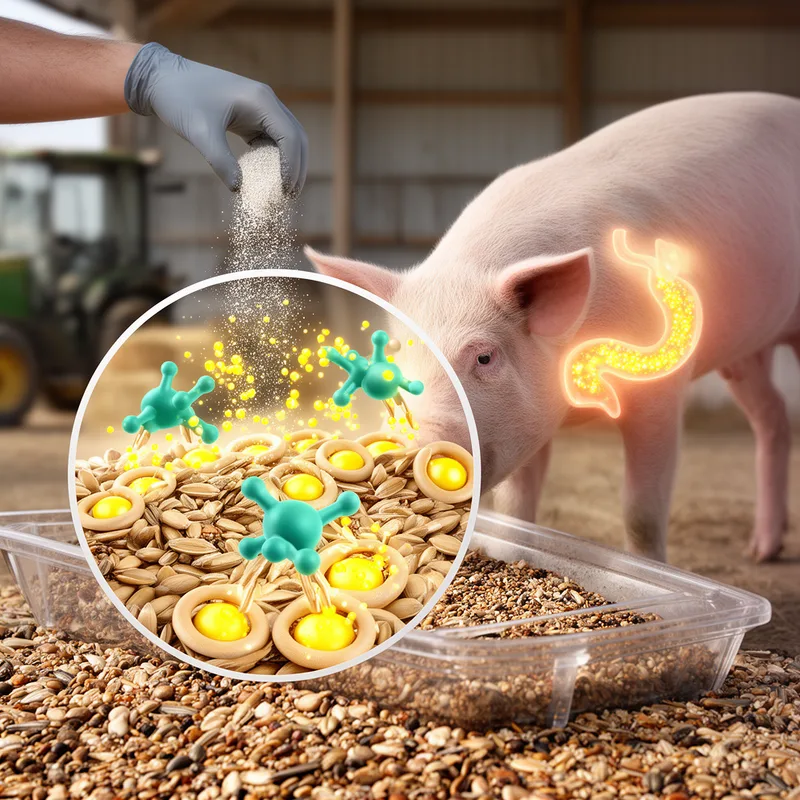
- The addition of phytase to livestock feed enhances the breakdown of phytic acid, improving nutrient absorption.
Loading YouTube…
Watch on YouTubeIt's also phytase is something that can also give you wind.
- It's also phytase is something that can also give you wind.
Examples
-
In experiments, phytase can increase phosphorus use to around 42 percent.
Academic text (1996) -
Ruminant animals have an enzyme called phytase, which allows them to eat cereal grains and reap the benefits, but humans do not have this enzyme.
Blog text (29) -
At the source level, this could involve refining feed rations, adding substances like phytase to improve animal absorption of phosphorus, or finding alternative uses for manure.
Academic text (2001) -
The transgenic "enviropig" contains the Escherichia coli gene for phytase; the pigs produce phytase in their saliva, allowing them to fully digest phytate (Feedstuffs 2010).
Academic text (2011) -
The transgenic "enviropig" contains the Escherichia coli gene for phytase; the pigs produce phytase in their saliva, allowing them to fully digest phytate (Feedstuffs 2010).
Academic text (2011) -
The enzyme phytase is often added to animal feed to help animals absorb more nutrients from their food.
-
Farmers commonly use phytase in feed formulas to increase the bioavailability of phosphorus for their animals.
Surface Forms
Morphology
phytase = phytate (semi-transparent) = phyt + ase
Formed by the scientific root 'phyt-' (relating to phytic/phytate) plus the enzyme-forming suffix '-ase'; the formation is clear to those with scientific knowledge but the root is obscure to general learners.
Etymology
Phytase comes from the Greek root phyto- meaning 'plant' and the ending -ase meaning 'enzyme', as in lactase. So, phytase is an enzyme that 'breaks down' a plant substance called phytic acid, helping animals and seeds get more nutrients.