
phytate


 1
9.3
- noun
- /ˈfaɪteɪt/
- Specialized
- The study found that phytate levels in grains can interfere with the absorption of essential minerals.
- phytate and zinc
Loading YouTube…
Watch on YouTubeYou know, often people ask me about phytates, which is another kind of quote UN quote anti nutrient.
- You know, often people ask me about phytates, which is another kind of quote UN quote anti nutrient.
- I also wouldn't wouldn't waste a lot of time chasing zinc in plant foods and then running the risk of having an oxalate or phytate reaction in your body.
Examples
-
The scientists lowered phytate consumption by providing white rice in place of higher phytate brown rice.
Academic text (2002) -
For the third phase of the study, the volunteers eat their familiar foods, including high-phytate rice.
Academic text (2002) -
This diet provides about 20 parts phytate to 1 part zinc.
Academic text (2002) -
In the second phase, the volunteers eat foods with less phytate, resulting in a ratio of about 8 parts phytate to 1 part zinc.
Academic text (2002) -
A study in South Korea is exploring the interaction of phytate and zinc in the body.
Academic text (2002) -
That's about the ratio of phytate to zinc that Americans consume.
Academic text (2002) -
In the three-phase experiment, the researchers are altering the relative amount of phytate to zinc the volunteers consume.
Academic text (2002) -
Studies in Brazil and South Korea are providing more information about the interplay of zinc and iron or zinc and phytate—a form of phosphorus.
Academic text (2002) -
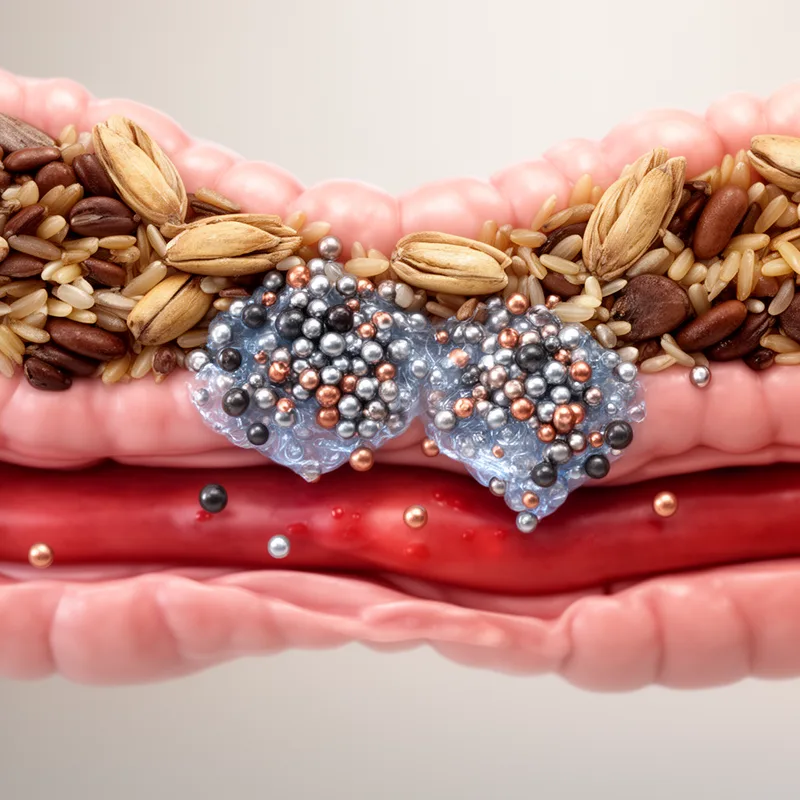
Research indicates that phytate, present in many seeds, can reduce nutrient availability for humans.
-
Soaking helps lower phytate content in grains, allowing for better nutrient absorption.
Surface Forms
Morphology
phytate = phytic acid (semi-transparent) = phyt + ate
The word is a standard chemical derivative of phytic acid, but the specialized salt/ester naming pattern is unlikely to be obvious to general learners.
Etymology
Phytate comes from the Greek root phyto- meaning 'plant' and the ending -ate that often means 'salt'. So phytate is like a 'plant salt', which fits because it is a salt of phytic acid found in seeds and grains.