
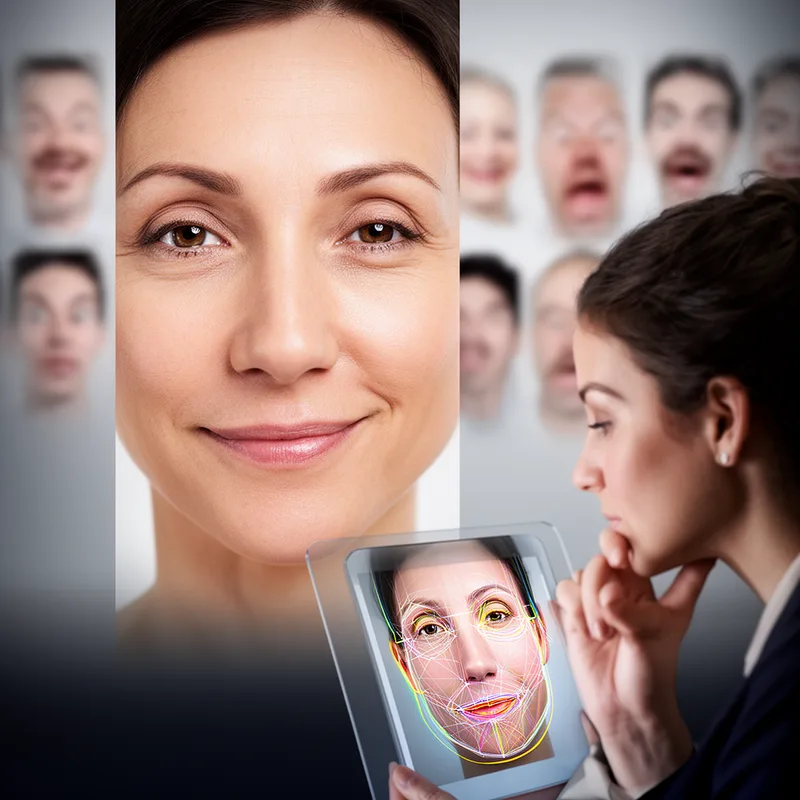
physiognomic


 1
9.6
- adjective
- /ˌfɪziəˈnɑːmɪk/
- Archaic
- The artist focused on the physiognomic traits of each subject to illustrate their unique personalities.
- physiognomic classification
- physiognomic likeness
- physiognomic map
Loading YouTube…
Watch on YouTubeSo Hegel is not actually comparing language here to action and physiognomic expression or phrenological expression too, right?
- So Hegel is not actually comparing language here to action and physiognomic expression or phrenological expression too, right?
Examples
-
Another distinguishing feature of Van Dyck's series was its physiognomic realism.
Academic text (2015) -
Their sole attributes are their poses, their physiognomic features, and the very fact of their captivity.
Academic text (2015) -
Yet Motley seems to have accepted racial categories and tried to document the physiognomic character of women of mixed race.
Academic text (2015) -
Kuchler drew the fairly obvious conclusion that physiognomic classification is appropriate in this case.
Academic text (1991) -
Fahd also summarizes the Islamic science of firsa as consisting of the medical study of shapes and the physiognomic study of character (383).
Academic text (2013) -
Many believe that physiognomic features can reveal a lot about a person's character.
-
In his study, he highlighted the physiognomic aspects that define social perceptions of beauty.
Surface Forms
Morphology
physiognomic = physiognomy (transparent) = physiognomy + ic
A standard adjective formed from the noun 'physiognomy' with '-ic'; if a learner knows 'physiognomy' the adjective's meaning is directly predictable.
Etymology
Physiognomic comes from Greek parts: physio- meaning 'body' or 'appearance' (like physical) and -gnomic meaning 'judge' or 'know'. So physiognomic is about judging a person's character from their face or outward appearance.