
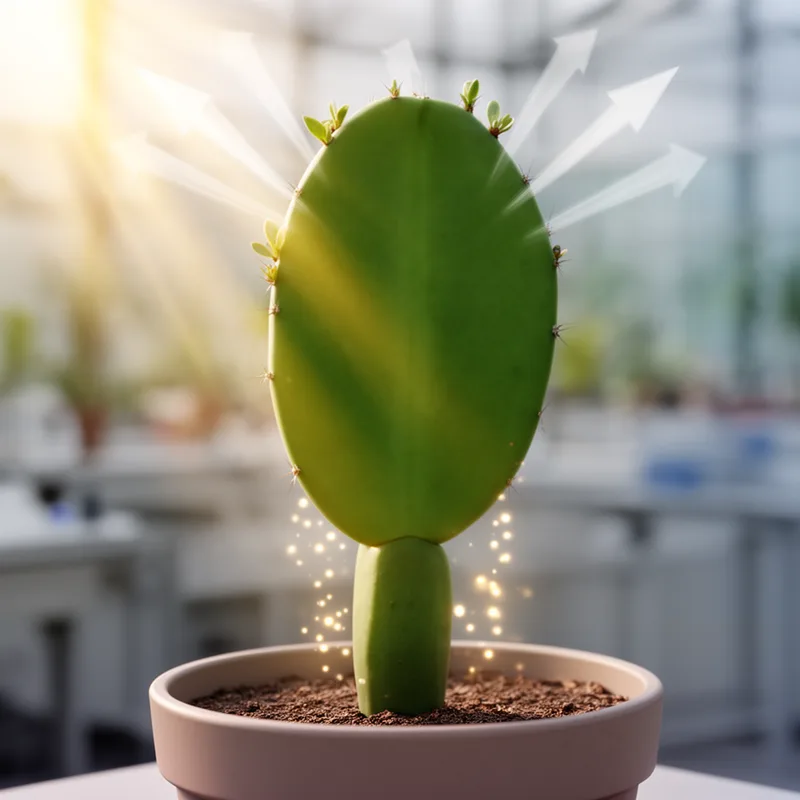
phylloclade
- noun
- /ˈfɪl.ə.kleɪd/
- Specialized
- The cactus has a phylloclade that performs photosynthesis instead of its small leaves.
Examples
-
Some species of Asparagus develop a phylloclade to adapt to arid conditions.
-
A botanist explained how the phylloclade differs structurally from an ordinary leaf.
-
A phylloclade is essential for some plants.
-
The cactus has a unique phylloclade structure.
-
Some species of Asparagus develop a phylloclade to adapt to arid conditions.
-
The cactus has a phylloclade that performs photosynthesis instead of its small leaves.
-
A botanist explained how the phylloclade differs structurally from an ordinary leaf.
Synonyms

A flat stem that looks and works like a leaf

A flat stem that looks like and works as a leaf

A flat stem that looks like a leaf and makes food for the plant, for example in cactus plants
How Leaf-Like


Surface Forms
Morphology
Etymology
Phylloclade comes from Greek parts phyllo- 'leaf' and -clade 'branch'. It names a stem or branch that is flattened and acts like a leaf, so plants use a phylloclade to make food when their real leaves are small.