
phycobilin


 1
9.9
- noun
- /faɪkoʊˈbɪlɪn/
- Specialized
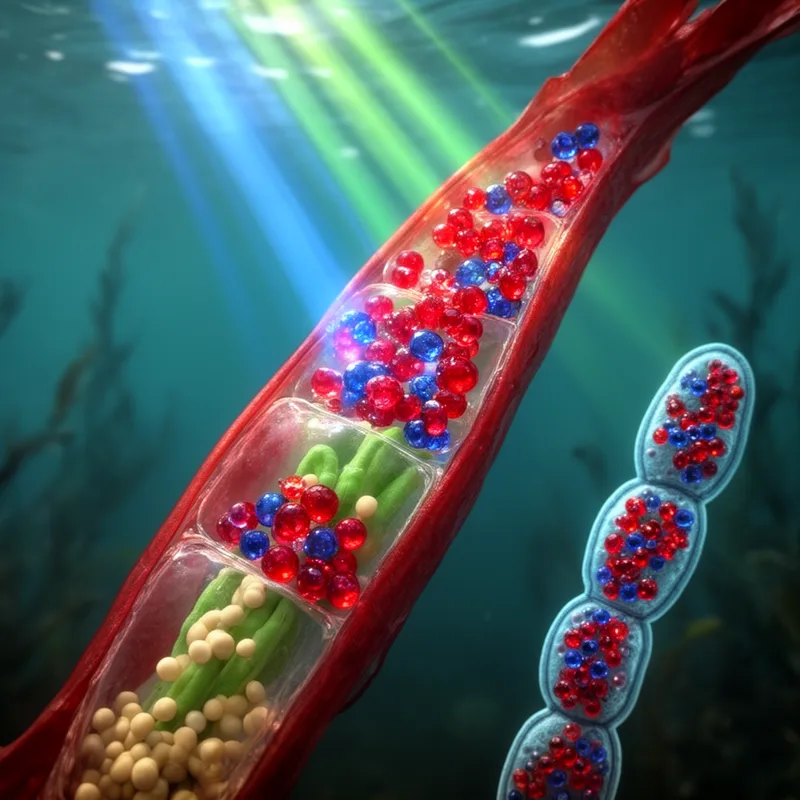
- Red algae contain phycobilin pigments that enable them to absorb blue and green light for photosynthesis.
Examples
-
The unique color of cyanobacteria is partly due to the presence of phycobilin.
-
Scientists study phycobilins for their role in photosynthesis.
-
Scientists study phycobilin to better understand the light-gathering mechanisms of certain algae.
-
The phycobilin gives red algae their vibrant color.
-
Red algae contain phycobilin pigments that enable them to absorb blue and green light for photosynthesis.
-
The unique color of cyanobacteria is partly due to the presence of phycobilin.
-
Researchers are investigating phycobilin to improve our understanding of photosynthesis in aquatic plants.
Synonyms
 1
9.9
A red protein in some seaweeds that helps them use light to make food
A blue substance in some algae that helps them make food from light
Surface Forms
Morphology
phycobilin = phyco + bilin
The term is a technical biochemical formation (phyco- + bilin) using specialised combining forms unfamiliar to average learners, so its meaning is not derivable from common English morphemes.
Etymology
Phycobilin comes from phyco- meaning 'seaweed' or 'algae' and -bilin from a word for 'bile' that later meant 'pigment'. So, phycobilin is literally an 'algae pigment', which fits because it is the coloured molecule in algae that helps them catch light to make energy.