
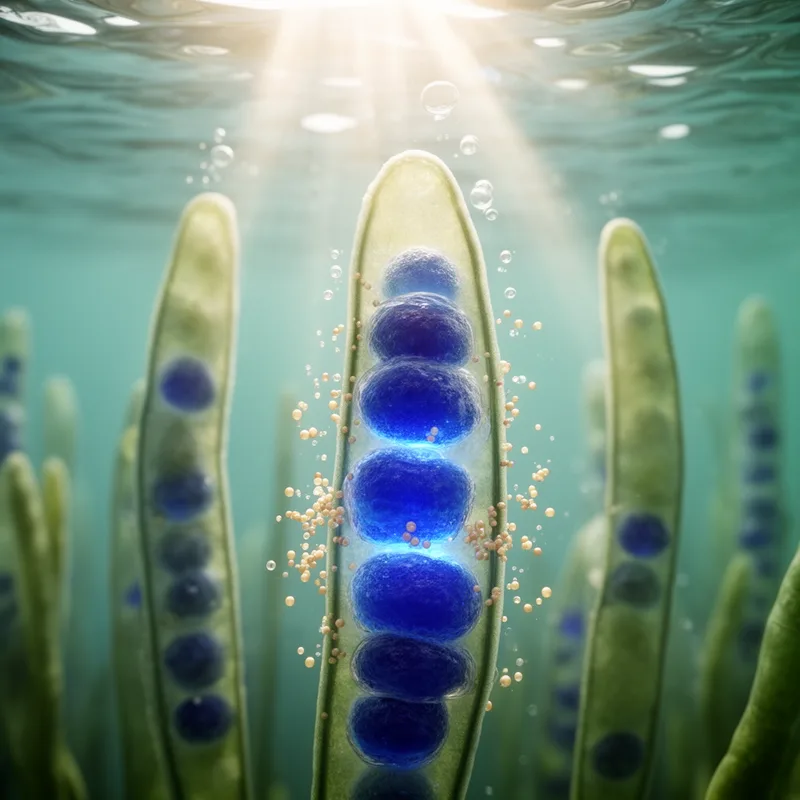
phycocyanin
- noun
- /faɪkoʊˈsaɪənɪn/
- Specialized
- The phycocyanin in spirulina gives it a vibrant blue color.
Examples
-
The deep blue color in some lakes is caused by phycocyanin, a pigment found in cyanobacteria.
-
Scientists isolated phycocyanin from the blue-green algae for laboratory analysis.
-
Researchers are studying phycocyanin for its potential antioxidant properties.
-
The deep blue color in some lakes is due to the presence of phycocyanin produced by cyanobacteria.
-
Many health supplements contain phycocyanin for its antioxidant properties.
-
Scientists isolated phycocyanin from the blue-green algae to study its role in photosynthesis.
-
Many health supplements include phycocyanin because of its potential benefits for health.
Synonyms



 1
9.9
A red protein in some seaweeds that helps them use light to make food
 1
9.9
A colored substance in some algae and blue-green bacteria that helps them use light to make food
Surface Forms
Morphology
phycocyanin = phyco + cyanin
The components 'phyco' and 'cyanin' are not standalone English words, and their meanings are not transparent to an average English learner.
Etymology
The word phycocyanin comes from phyco- meaning 'algae' and cyanin from a word meaning 'blue', the same root as cyan. So phycocyanin is a blue substance made by algae, which is why it gives a deep blue color and helps in photosynthesis.