
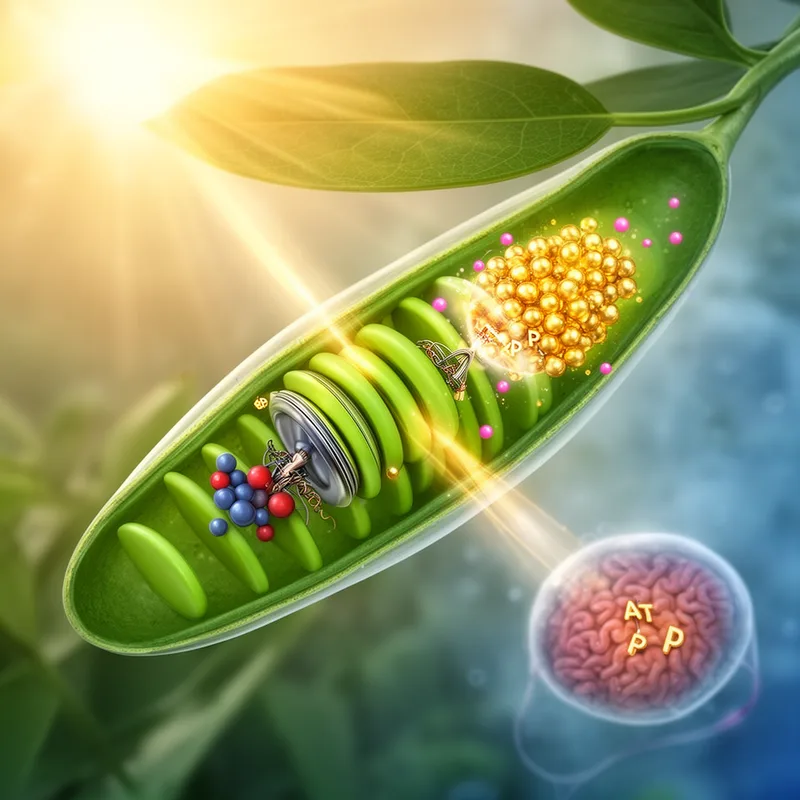
photophosphorylation
- noun
- /ˌfoʊtoʊˌfɑːsfəˈrɪleɪʃən/
- Specialized
- During photophosphorylation, plants convert light energy into chemical energy.
Examples
-
The process of photophosphorylation occurs in the thylakoid membranes.
-
During photosynthesis, plants utilize light energy to drive photophosphorylation and produce ATP.
-
In chloroplast thylakoid membranes, photophosphorylation produces ATP during the light-dependent reactions.
-
Scientists study photophosphorylation to better understand how plants convert sunlight into chemical energy.
-
Without photophosphorylation, plants would not be able to produce the ATP needed for growth.
-
In the process of photophosphorylation, chloroplasts convert sunlight into chemical energy.
-
Scientists study photophosphorylation to understand how plants generate energy from light.
Synonyms

The first stage in plants' use of light to make energy molecules
Surface Forms
Morphology
photophosphorylation = phosphorylation (opaque) = photo + phosphoryl + ation
The term is formed by adding 'photo-' to the technical noun 'phosphorylation', but the biochemical process is not easily inferable for an average learner.
Etymology
The word photophosphorylation begins with photo- meaning 'light', as in photograph, and ends with phosphorylation, which means 'adding a phosphate', a small chemical part cells use to store energy. So photophosphorylation is the process where light helps add phosphate to make ATP, the molecule cells use for energy.

