

photographic film


 1
3.1
1
3.1
- noun
- /ˌfoʊtəˈgræfɪk fɪlm/
- Specialized
- The photographer developed the photographic film to reveal the stunning landscape shots.
- image on photographic film
Examples
-
All photographic film is properly exposed when the amount of light that reaches it is equal to midtone gray of 18%.
Academic text (1994) -
When exposed to light, silver salts on a photographic film reduce to elemental silver and darken, creating an image.
Blog text (16) -
"It's likely that all color photographic films and papers will disappear in the next five years.
Blog text (24) -
Within days, he was recording x-ray images on photographic film.
Academic text (2012) -
The spectrum is recorded for analysis on photographic film or digitally, in a computer.
Academic text (2004) -
In commercial printing, the separate cyan, magenta, yellow, and black images on photographic film are used to make printing plates by contact exposure.
Academic text (1992) -
A familiar, fundamental technique, X-radiography uses high-energy radiation to penetrate materials and record an image digitally or on photographic film.
Academic text (2003) -
To produce an X-ray image, radiation passes through the subject, resulting in an image on photographic film that displays the variation in the subject's density (box 1).
Academic text (2004) -
At Friendship Stores throughout China (where foreigners are encouraged to shop), the government-set prices for the development of photographic film vary depending on the currency used for payment.
Academic text (1990) -
When exposed to light, the photographic film captures a detailed image of the scene.
Synonyms
 301
2.5
301
2.5
A thin strip coated with chemicals that react to light for photos
 15
5.5
15
5.5
A strip of film with tiny photos of pages for saving space and reading with a magnifying glass
 2
3.3
2
3.3
A long strip of pictures on film that you show with a projector
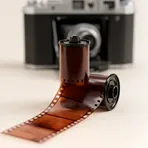 1
3.9
1
3.9
A strip of material for taking photos that is wound on a spool
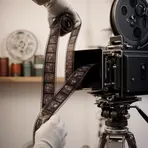 1
4.0
1
4.0
A long roll of plastic with many pictures that goes in a movie camera
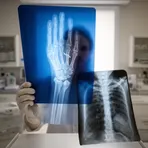 1
3.0
1
3.0
Special film that records pictures made by X-rays to show bones or the inside of objects
 1
4.2
1
4.2
Paper or other material that changes when light hits it and is used to make photos
 1
1.8
1
1.8
A long roll of material that records moving pictures in a movie camera

Material for taking pictures that records light in colors we can see

A long roll of photo film used to record movies
Surface Forms
Morphology
The noun phrase is directly compositional: 'photographic' (relating to photography) simply specifies the type/purpose of 'film', so the overall meaning — film for photography — follows straightforwardly from the parts. This adjective + noun pattern is a basic, cross-linguistically common composition that a B1 learner who knows both constituents will readily understand.
Etymology
Photographic film comes from early cameras: a thin strip of material covered with chemicals that react to light and make a picture when light hits it. That's why the word film now means the thin material used in cameras to 'capture' images and make movies.