
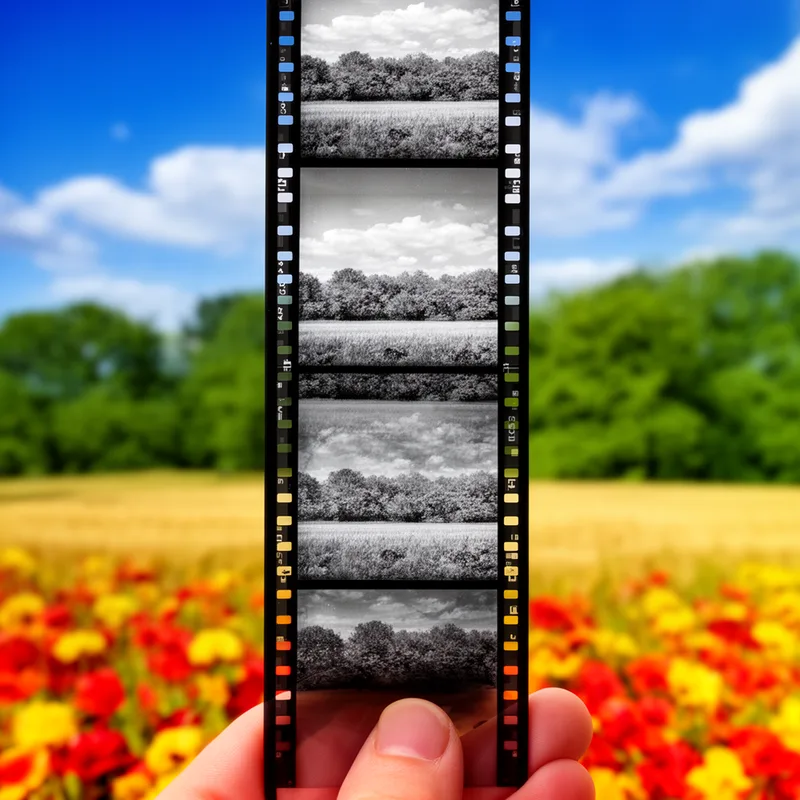
panchromatic film
- noun
- /ˌpæŋkrəˈmætɪk fɪlm/
- Specialized
- Because panchromatic film captures a full spectrum of light, it is ideal for detailed landscape photography.
Examples
-
Many classic movies were shot on panchromatic film to achieve balanced grayscale tones.
-
Early photographers favored panchromatic film for its accurate color rendering in black-and-white prints.
-
The photographer prefers panchromatic film for its versatility.
-
Have you tried using panchromatic films for your projects?
-
Many photographers choose panchromatic film because it captures all visible colors for great detail.
-
For stunning black-and-white images, using panchromatic film can enhance the tonal range.
-
In landscape photography, panchromatic film is preferred for its sensitivity to light across the visible spectrum.
How Sensitive
- Specialized

- Archaic
Surface Forms
Morphology
The phrase is directly compositional: 'panchromatic' (responsive to the full spectrum of visible light) modifies 'film', so a learner who knows both constituents can infer it means film sensitive to all visible colors. The adjective+noun structure and the identifiable morpheme pan- ('all') make the meaning predictable rather than idiomatic.
Etymology
Panchromatic film comes from two small words: pan meaning 'all' and chromatic meaning 'color'. So it literally means film that 'sees' all colors, which is why this film captures every color of light and gives balanced gray tones in black-and-white photos.

