
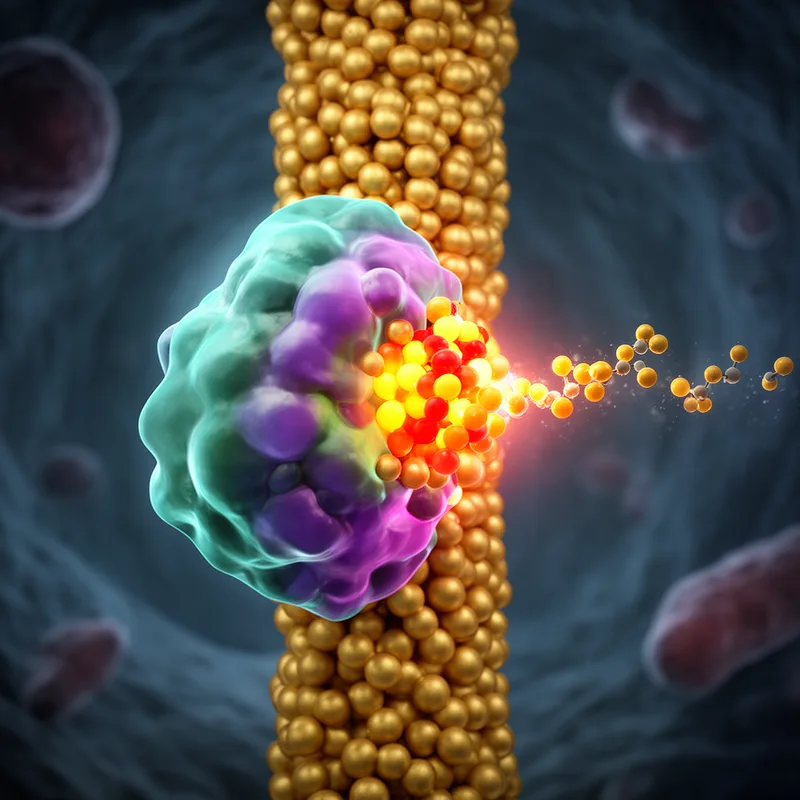
phosphorylase
- noun
- /ˌfɑːs.fəˈrɪ.leɪs/
- Specialized
- The phosphorylase enzyme is crucial for energy metabolism.
Examples
-
The phosphorylase enzyme plays a key role in breaking down glycogen in muscle cells.
-
Researchers studied how phosphorylase activity changes during exercise.
-
A deficiency in phosphorylase can lead to problems with energy release in the body.
-
Researchers study phosphorylases to understand metabolic pathways.
-
In the metabolic process, phosphorylase helps convert glycogen into glucose by adding phosphate groups.
-
The enzyme phosphorylase plays a crucial role in breaking down carbohydrates within the cell.
-
Research showed that increasing the activity of phosphorylase can enhance energy production during exercise.
Synonyms
 7
8.4
7
8.4

A protein that adds a phosphate to other proteins or molecules to change their activity

An enzyme that adds phosphate to other molecules to help cells use energy
Surface Forms
Morphology
phosphorylase = phosphorylate (semi-transparent) = phosphoryl + ase
Formed with the enzyme-forming suffix '-ase' on the chemical base 'phosphoryl/ phosphorylate'; the structure is regular but requires domain knowledge of biochemical terminology.
Etymology
Phosphorylase starts with phosphoryl, a part related to phosphorus (a name linked to 'light'), and ends with -ase, which means 'enzyme'. A phosphorylase adds or moves a phosphate group so the cell can break down molecules, so the name tells you it is an enzyme that works with phosphate.