
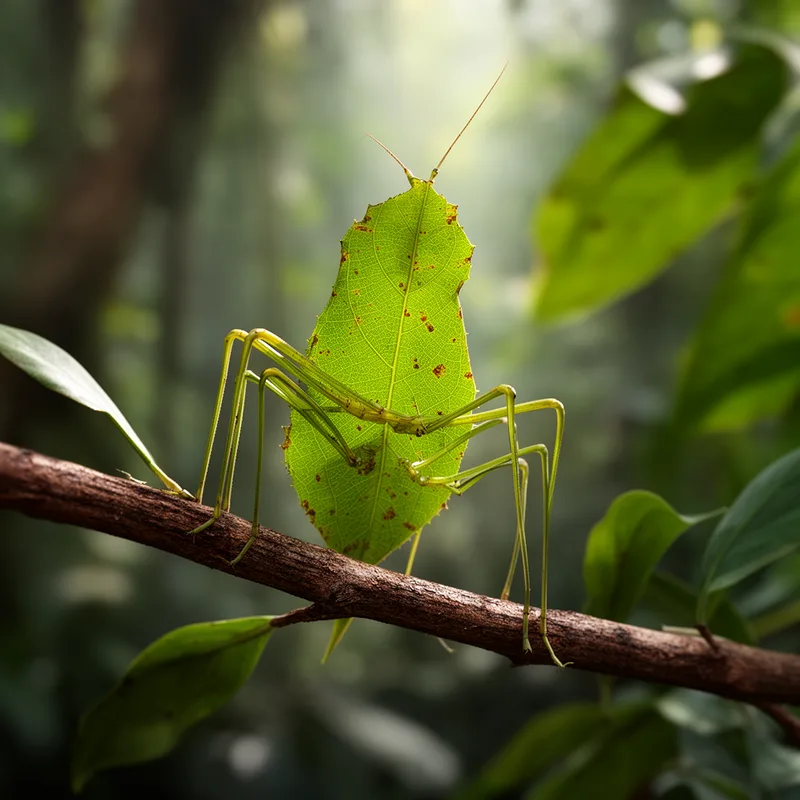
phasmid
 1
9.9

- noun
- /ˈfæz.mɪd/
- Specialized
- The phasmid, often camouflaged as a twig, can be very hard to spot in the wild.
Examples
-
Several species of phasmids are popular in the pet trade for their unique looks.
-
Researchers discovered a new phasmid species in the tropical rainforest.
-
The phasmid remains almost invisible among the branches due to its leaf-like appearance.
-
The phasmid can camouflage itself perfectly with its surroundings.
-
Have you ever seen a phasmid in the wild?
-
In the rainforest, we saw a giant phasmid resting on a leaf, blending perfectly with its surroundings.
-
Many children find phasmids fascinating because of their ability to mimic leaves or sticks.
Synonyms
 2
5.6
A long thin insect that looks like a twig
Surface Forms
Morphology
phasmid = phasm + id
Formed from a Greek combining form ('phasm-') plus a scientific/taxonomic suffix '-id'; these elements are not productive or familiar to an average B1 learner, so the meaning cannot be reliably derived from visible parts.
Etymology
Phasmid comes from the Greek phasma, meaning 'ghost' or 'apparition', and it shares the same root as the English word phantom. That's why phasmids have this name: they hide like little ghosts, looking like sticks or leaves and seeming almost invisible among branches.