
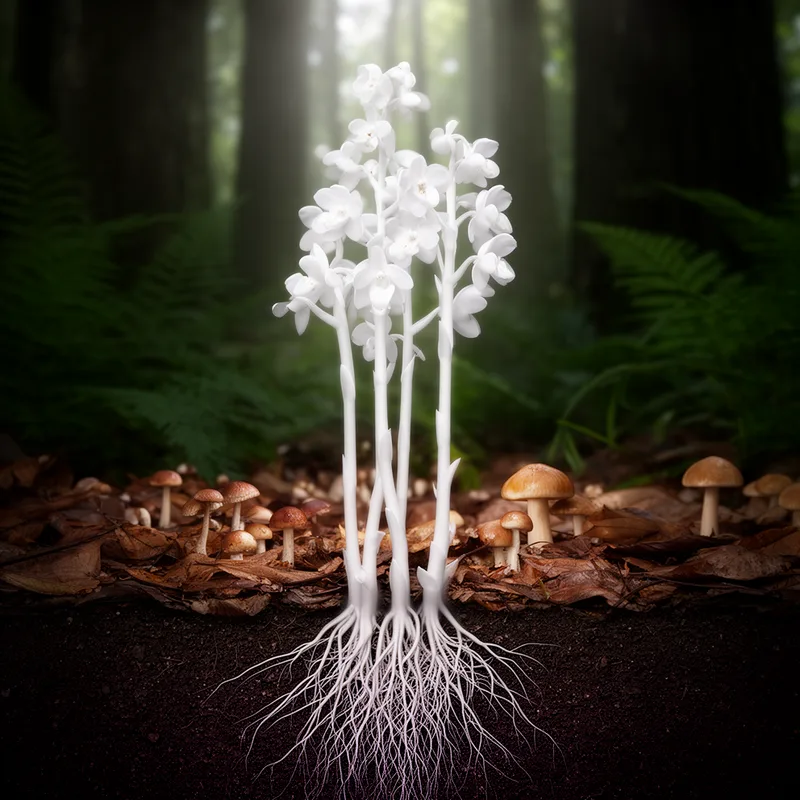
phantom orchid
- noun
- US
- The phantom orchid thrives in shaded areas, relying on fungi instead of photosynthesis.
Examples
-
The phantom orchid is so pale it almost glows in the dense forest undergrowth.
-
Botanists were thrilled to find a small cluster of phantom orchids in the remote canyon.
-
The phantom orchid is a rare sight in the wild.
-
Have you ever seen a phantom orchid before?
-
Botanists were thrilled to find a small cluster of phantom orchids in the remote canyon.
-
The phantom orchid thrives in shaded areas, relying on fungi instead of photosynthesis.
-
The phantom orchid is so pale it almost glows in the dense forest undergrowth.
Synonyms
A waxy plant often without green leaves that has clusters of white flowers in northwestern United States
A small plant with white waxy flowers and few leaves that grows in western US mountains
How Common


Surface Forms
Morphology
This is a straightforward modifier + noun composition: a learner who knows 'phantom' (ghostly, illusory) and 'orchid' (a type of flowering plant) can infer it denotes an orchid with a ghostly/pale appearance. Although it is a specific species name, the meaning is descriptively built from its constituents and follows a common cross-linguistic naming pattern, so a B1 learner would likely understand its basic sense.
Etymology
Phantom orchid gets its name from how the plant looks: the word phantom shows its pale, almost white flowers and the lack of green leaves, so the orchid can seem like a small ghost hiding in the forest. That's why the name helps you remember this rare, 'ghostlike' plant.