
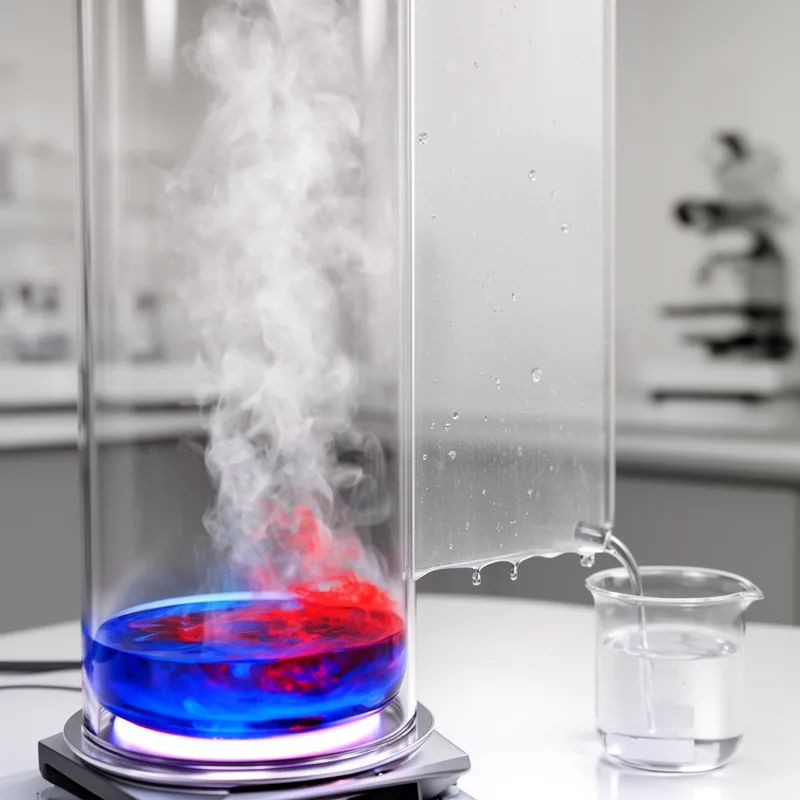
to pervaporate
- verb
- /pərˈveɪpəˌreɪt/
- Specialized
- During the experiment, the solvent began to pervaporate rapidly, leaving behind a concentrated solution.
Examples
-
To purify the water, scientists allowed it to pervaporate through a specialized membrane.
-
The process can pervaporate the solvent effectively.
-
If the compound fails to pervaporate, the separation process will not be effective.
-
Can you pervaporate this?
-
To purify the water, scientists allowed it to pervaporate through a specialized membrane.
-
If the compound fails to pervaporate, the separation process will not be effective.
-
During the experiment, the solvent began to pervaporate rapidly, leaving behind a concentrated solution.
Synonyms

 40
3.5

Change a liquid like water into gas by heating
 10
5.3
To change from a liquid into gas, usually by heating


 1
9.2
To change from a liquid into a gas and disappear
Surface Forms
Morphology
pervaporate = vaporate + vapor (semi-transparent) = per + vapor + ate
The word is compositionally 'per-' (through) + 'vapor' + '-ate', and the meaning 'evaporate through a membrane' matches this structure, but the prefix is a Latin scientific prefix and the term is specialized, so it may not be obvious to general learners.
Etymology
Pervaporate comes from the parts per- meaning 'through' and vapor meaning 'steam' or 'gas', like in vapor or evaporate. So to pervaporate is to make a liquid turn into vapor and pass 'through' a membrane, which is exactly the idea behind this separation process.