
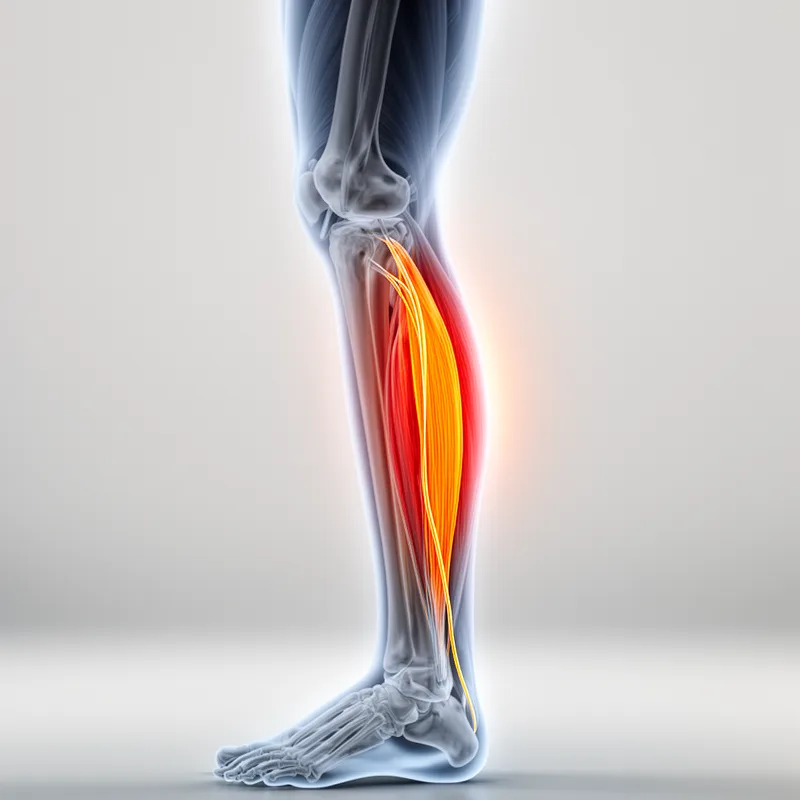
peroneal
 1
9.9

- adjective
- /ˌpɛrəˈniːəl/
- Specialized
- The common peroneal nerve is important for proper foot movement.
- peroneal nerve
- peroneal nerve stimulation
- peroneal muscle
Examples
-
The deep peroneal nerve runs through the anterior aspect of the leg.
Academic text (2007) -
At the beginning of therapy, bilateral stimulation of the peroneal nerves was chosen.
Academic text (1992) -
Therefore, a new approach was chosen with stimulation of the left peroneal nerve and quadriceps muscle after one week.
Academic text (1992) -
In 10 CVA patients, the peroneal nerve was stimulated for correction of equinovarus during the swing phase.
Academic text (1992) -
The common peroneal nerve (CPN) is the most commonly injured nerve in the lower limb.
Academic text (2012) -
Injury to the CPN and, more specifically, the deep peroneal nerve (DPN), can lead to permanent weakness or paresis of toe and ankle dorsiflexors.
Academic text (2012) -
During surgery, the surgeon carefully avoided damaging the peroneal nerve along the leg.
-
The peroneal muscles help stabilize the ankle while walking.
Synonyms
 1
7.5
Relating to the thin outer bone of the lower leg
Compounds
- Specialized
A vein in the lower leg that carries blood from the outer side to deep veins near the knee
Surface Forms
Morphology
peroneal = perone (opaque) = perone + al
The adjective is formally built from the anatomical noun 'perone' plus '-al', but the base term is specialized and not transparent to an average learner.
Etymology
The word peroneal comes from the Greek word perone, which meant 'pin' or 'buckle'. People thought the thin bone on the outer lower leg looked like a small pin, so peroneal now means 'relating to the outer bone or the outer part of the lower leg'.