
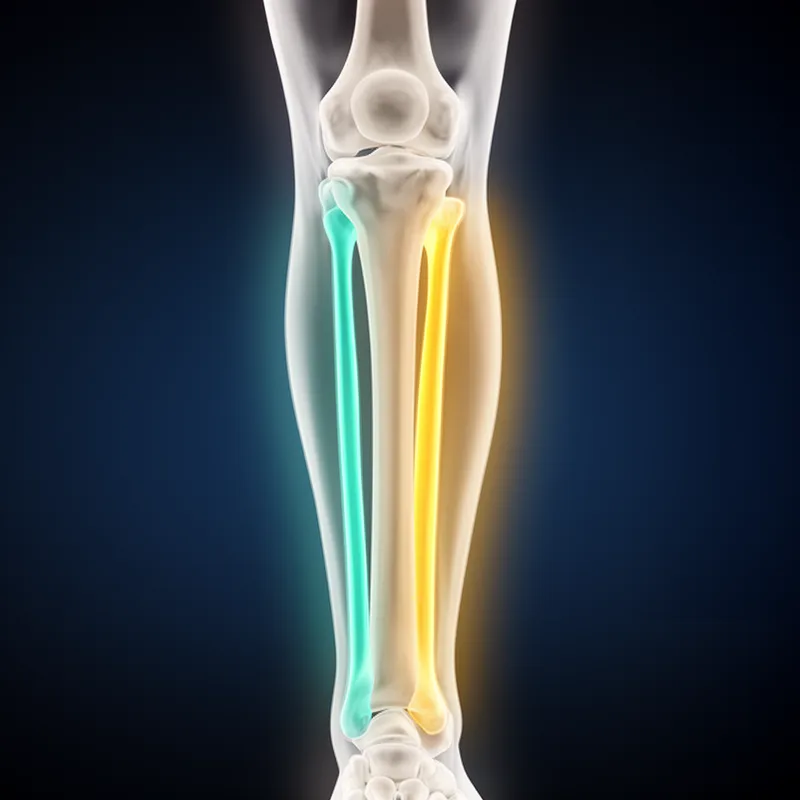
fibular
 1
7.5

- adjective
- /ˈfɪbjələr/
- Specialized
- The main aim of the study was to identify the proportion of children with acute ankle injury and isolated distal fibular clinical findings who have fractures that are at risk of complications.
- fibular head
- fibular end
- pressure over the fibular
Examples
-
Doctors often assess the fibular area to determine the cause of ankle pain.
-
Pediatric tibial and fibular shaft fractures are usually uncomplicated and can be treated with simple closed reduction, manipulation, and cast application.
Academic text (2006) -
The proximal trim line was set 2.5 cm below the fibular head, and the metatarsal trim line was extended to the tip of the toes.
Academic text (1997) -
Nurses must check the circulation, sensation, and movement of the toes in all children with a tibia and/or fibular fracture.
Academic text (2006) -
Current surgical treatments include decompression at the fibular head for compressive palsies (3, 4).
Academic text (2012) -
The fibular head is an important landmark for orthopedic surgeons during knee surgeries.
-
Athletes need to be aware of the fibular bone to prevent injuries in the lower leg.
Synonyms
 1
9.9
Of the outer part of the lower leg near the fibula
Compounds
Surface Forms
Morphology
Etymology
Fibular comes from the Latin fibula, which meant 'brooch' or 'clasp'; people used the same name for the thin outer leg bone because it is small and pin-like. So fibular means 'relating to the thin outer bone of the lower leg'.