
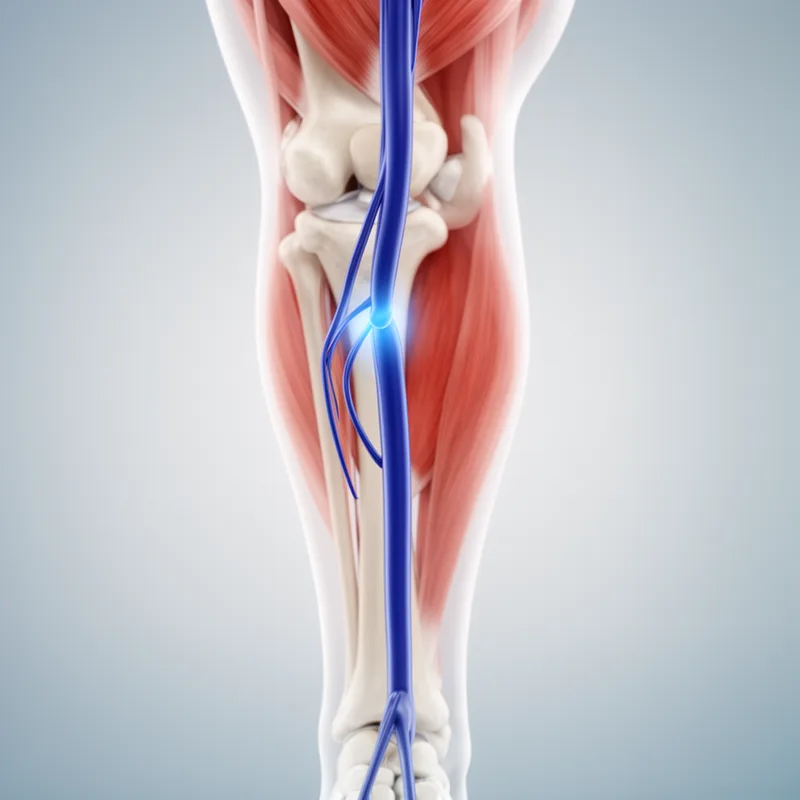
fibular vein
- noun
- /ˈfɪbjələr veɪn/
- Specialized
- Ultrasound can help identify a clot in the fibular vein of the lower leg.
Examples
-
During surgery, the fibular vein is carefully preserved to maintain proper circulation.
-
The fibular vein runs alongside the peroneal arteries.
-
Deep injury to the leg may damage the fibular vein and cause significant bleeding.
-
Surgeons examined the fibular vein during the procedure.
-
An injury to the lower leg can damage the fibular vein, leading to severe complications.
-
Doctors monitor the fibular vein during leg surgeries to prevent any disruptions in blood flow.
-
A blockage in the fibular vein may indicate underlying vascular issues in the leg.
Synonyms
A vein in the lower leg that carries blood from the outer side to deep veins near the knee
A vein at the back of the lower leg that carries blood from the heel to larger veins
Surface Forms
Morphology
The meaning is directly and compositionally derived from 'fibular' (pertaining to the fibula/outer lower leg) + 'vein' (a blood vessel), so a learner who knows both constituents can infer it denotes a vein associated with the fibula region. This follows common anatomical naming patterns (adjective + body-part noun) that are cross-linguistically regular, making the phrase transparent despite its technical domain.
Etymology
Fibular vein is named for the nearby bone. Fibular means 'of the fibula', the smaller lower leg 'bone', so the fibular vein is the vein that runs beside that bone, which is why the name shows where it is in the leg.

