
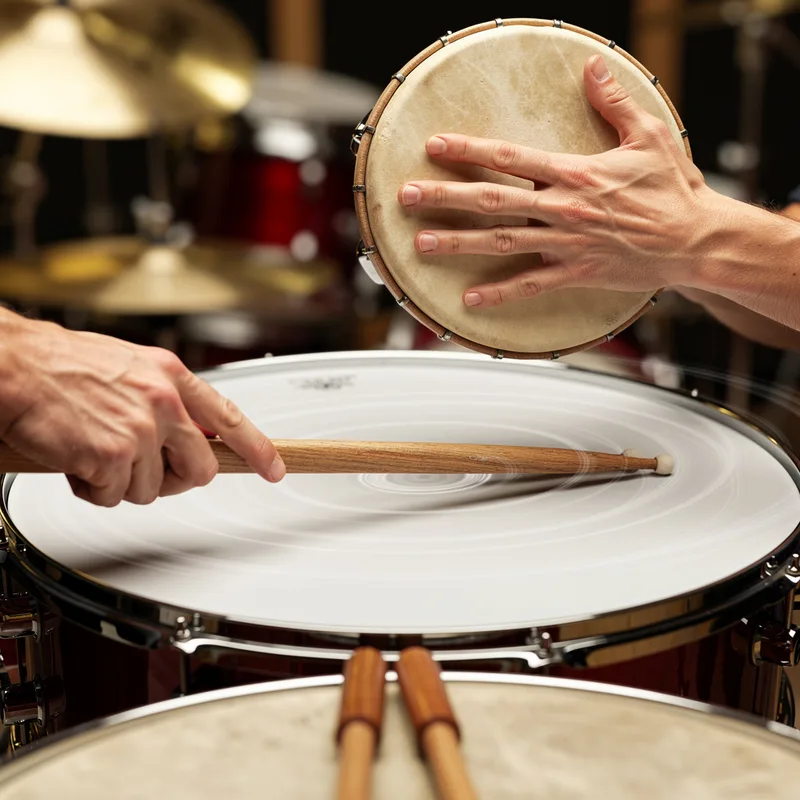
percussive
 5
6.5
5
6.5

- adjective
- /pərˈkʌsɪv/
- The percussive sound of the drums filled the concert hall with energy.
- percussive sound
- percussive music
- percussive guitar styles
Loading YouTube…
Watch on YouTubeWe found giant rocks on the shore that could be rocked and made these incredible percussive sounds.
- We found giant rocks on the shore that could be rocked and made these incredible percussive sounds.
- Vibration, Vibration and percussive therapy like what we have that actually tricks the brain and it takes the pain away.
- No, this is this is just a feature, let's call it a percussive RGB front panel.
Examples
-
Slowly, then, a low rumble joined the percussive sound.
Fiction book (1992) -
Sitting cross-legged to her left, he had to lean close to be heard over the percussive cadence.
Fiction book (1990) -
Her heels made a percussive noise on the stone floor.
Fiction book (1999) -
On the second round of the melody, tap with the metallic percussive sound.
Academic text (2005) -
There's a great deal more emphasis now on percussive effects.
-
Scores of this type might be derived from other music featuring layers of percussive sounds.
Academic text (1998) -
The production will also include a new set, new choreography, and a new percussive number featuring tap dancing.
Blog text (26) -
To be sure, their power inheres largely in their percussive thump.
Academic text (2016) -
As the tool travels through the pipe, its percussive action breaks apart the old pipe and displaces the fragments into the surrounding soil.
Academic text (2000) -
Used by South African migrant workers in the gold mines and railways of the central and northern provinces, gumboot dancing is a percussive form of movement that relies on the sounds of the rhythms produced by gumboots when struck by the hand or stomped on the ground.
Academic text (2015)
Compounds
A musical instrument you play by hitting, shaking, or scraping, like a drum

How Percussive

Surface Forms
Morphology
Etymology
Percussive comes from the Latin verb percutere, which means 'to strike' or 'to hit'. You can see the same idea in percussion and in drums, so percussive describes sounds or music made by hitting things.