

peptic ulcer
 3
3.7
3
3.7

- noun
- /ˈpɛptɪk ˈʌlsər/
- Specialized
- Antibiotics can permanently cure 80 to 90 percent of peptic ulcers.
- peptic ulcer disease
Examples
-
However, a therapeutic and prevention strategy for such peptic ulcers has not yet been established.
Blog text (15) -
A combination regimen of two or more antibiotics has been used as the most effective way to eradicate H. pylori and subsequent peptic ulcer infections.
Academic text (2005) -
Approximately 25 million Americans suffer from peptic ulcer disease at some point in their lifetime.
Academic text (2005) -
What is the most effective therapy for low-dose aspirin-induced peptic ulcer?
Blog text (15) -
Retesting after treatment may be prudent for patients with bleeding or otherwise complicated peptic ulcer disease.
Academic text (2005) -
Each year, there are 500,000 to 850,000 new cases of peptic ulcer disease and more than one million ulcer-related hospitalizations.
Academic text (2005) -
Approximately 25 million Americans suffer from peptic ulcer disease at some point in their lifetime.
-
The bacterium Helicobacter pylori is shown to be the cause of most peptic ulcers.
Synonyms
 81
3.7
81
3.7
A painful sore on the skin or inside the body that can make pus
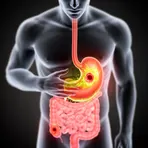
An ulcer in the stomach or top part of the gut caused by stomach acid
How Severe
- Specialized
3
3.7

- Specialized
3
4.1
Surface Forms
Morphology
The meaning ('a sore related to digestive juices/stomach lining') is directly and compositionally derived from 'peptic' (relating to digestive enzymes/juices) modifying 'ulcer' (a sore). This modifier+noun formation is regular and cross-linguistically transparent, so a learner who knows both constituents can infer the MWE meaning.
Etymology
Peptic ulcer comes from two parts: peptic (from an old word for 'digestion') and ulcer (a 'sore'). It paints a simple picture—a sore caused by the stomach's digesting action or stomach acid—so the term means 'a sore on the stomach or upper intestine caused by stomach acid'.