
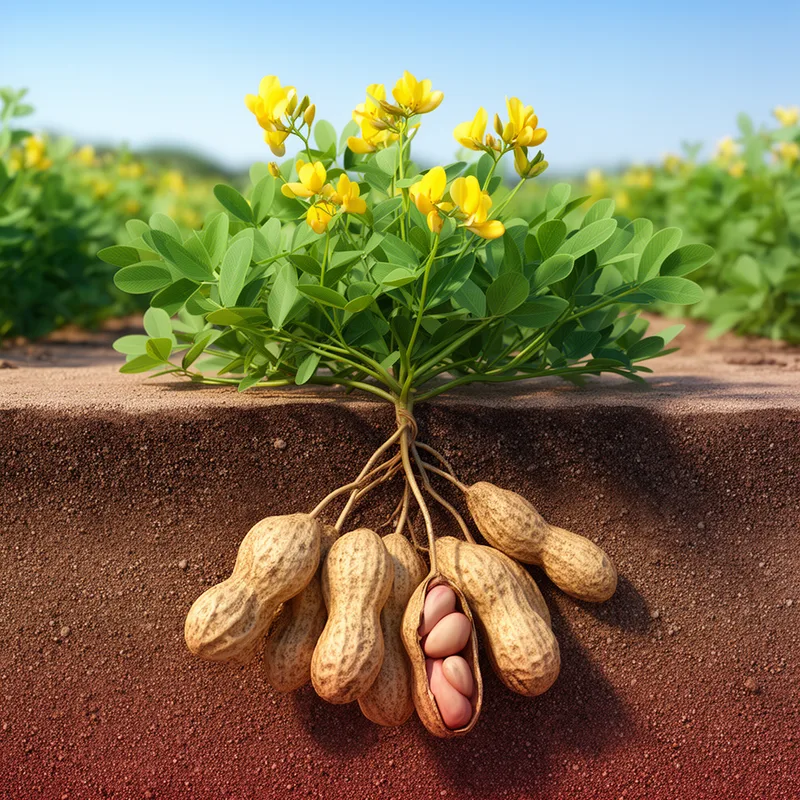
peanut vine
- noun
- /ˈpiːnʌt vaɪn/
- After flowering, the stems of the peanut vine bend so the pods can develop below the soil.
Examples
-
Farmers harvest the peanut vines when the pods have fully ripened underground.
-
The peanut vine thrives in sandy soils and warm climates.
-
The peanut vine grows well in sandy soil.
-
Farmers often plant peanut vines in early spring.
-
Farmers harvest the peanut vine in the fall, collecting the pods that contain the edible peanuts.
-
The peanut vine produces small yellow flowers before the pods develop underground.
-
In tropical regions, the peanut vine flourishes, producing a rich crop of peanuts beneath the soil.
Synonyms

 340
1.0
340
1.0

A small seed that grows in a pod underground and is eaten as a snack
A plant that makes edible seeds called peanuts that grow underground

A group of plants like the peanut that make pods underground
Surface Forms
Morphology
The compound combines a clear modifier ('peanut' — the edible seed/plant product) with a head noun ('vine' — a climbing or twining plant), so its meaning as a plant that bears peanuts or resembles a peanut-producing vine is directly inferable from the parts. This modifier+head noun compounding is a common, cross-linguistic pattern, so a B1 learner who knows both words would readily understand the MWE.
Etymology
Peanut vine comes from how the plant grows: its long, trailing stems, the vine, spread along the ground, and after flowering the plant pushes the young pods into the soil so the peanuts form below ground. That's why peanut vine refers to a plant whose pods 'develop underground'.