

papoose root
- noun
- US
- The papoose root blooms in early spring and produces showy blue fruits.
Examples
-
Native Americans traditionally used papoose root as a remedy for various ailments.
-
Herbalists sometimes refer to papoose root as blue cohosh.
-
The herbalist recommended papoose root for its medicinal properties.
-
Have you ever tried papoose root in a tea?
-
Native Americans traditionally used papoose root as a remedy for various ailments.
-
The herbalist recommended papoose root for its medicinal properties.
-
Herbalists sometimes refer to papoose root as blue cohosh.
Synonyms

A tall plant with blue berries and thick roots once used as medicine

Tall forest herb with blue berries and thick roots once used in traditional medicine

A tall plant that lives many years and has blue berries and thick knotted roots once used as medicine

A tall plant from eastern North America and Asia with blue berries and a thick root used as medicine
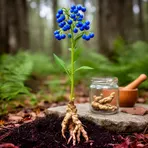
A tall herb with blue berries and a thick knotty root once used as medicine

A tall woodland plant with blue berries and a thick root once used in medicine

A thick root from the blueberry plant once used in traditional medicine
Surface Forms
Morphology
papoose + root
A B1 learner who knows 'root' but not the rare element 'papoose' cannot infer the botanical meaning from the constituents because 'papoose' is uncommon and does not supply an obvious descriptive sense; the phrase is a lexicalized plant name. Even if a learner knew 'papoose' in its other senses (e.g. baby or baby-carrier), those senses do not transparently map onto a plant, so the compound meaning is unpredictable.
Etymology
Papoose root gets its name from Native American use: papoose means 'baby', and the thick root was used as a medicine for mothers and babies, so people called the plant 'papoose root'.

