
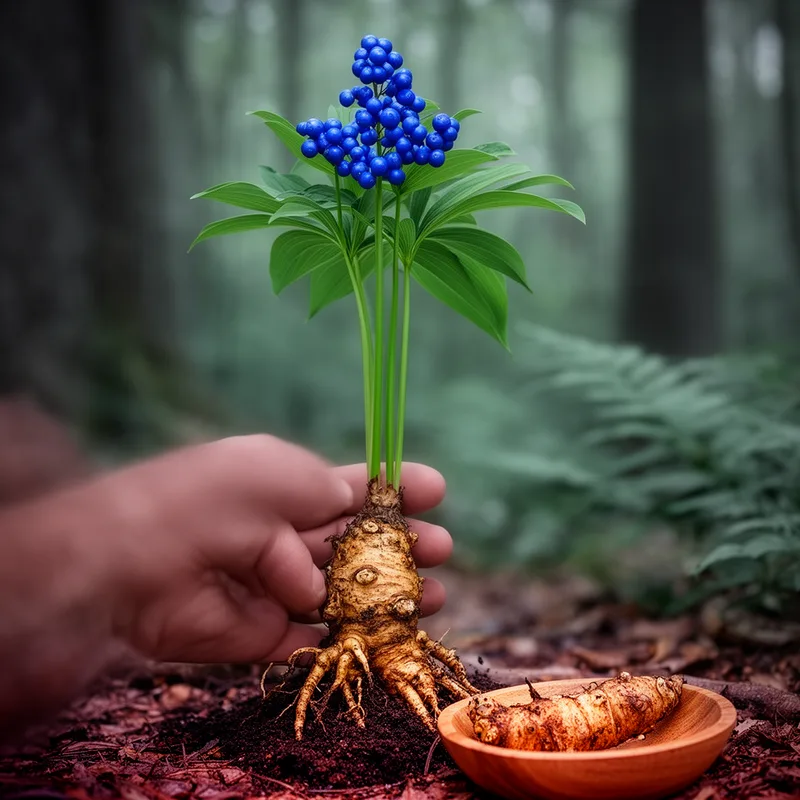
blue cohosh
- noun
- /bluː ˈkoʊhɑːʃ/
- US
- Herbalists sometimes caution against the use of blue cohosh due to its potential side effects.
Examples
-
We spotted a patch of blue cohosh growing along the shady forest floor.
-
The blue cohosh plant thrives in shaded areas.
-
The roots of blue cohosh were once used in traditional medicine to treat various ailments.
-
I found some blue cohosh growing near the river.
-
The herbalist recommended blue cohosh for its medicinal properties in treating women's health issues.
-
In the forest, we found the tall blue cohosh, known for its striking blue berries and thick roots.
-
During our hike, we spotted blue cohosh growing near the stream, a plant often used in traditional remedies.
Synonyms

Tall forest herb with blue berries and thick roots once used in traditional medicine

A tall woodland plant with blue berries and a thick root once used in medicine

A tall plant with blue berries and a thick root used as medicine

A tall plant that lives many years and has blue berries and thick knotted roots once used as medicine

A tall plant from eastern North America and Asia with blue berries and a thick root used as medicine
A tall herb with blue berries and a thick knotty root once used as medicine

A thick root from the blueberry plant once used in traditional medicine
Surface Forms
Morphology
The noun phrase is fully compositional: 'blue' simply modifies 'cohosh' to indicate a blue-fruited/blue-associated variety of the plant. A B1 learner who knows 'blue' and understands 'cohosh' as an herb would readily infer this meaning, since adjective + noun plant names are a transparent, cross-linguistic pattern.
Etymology
Blue cohosh may come from its blue, berry-like fruit and a Native American word cohosh for plants with rough, knotty roots that were used as medicine. So the name points to a plant with blue berries and a thick root used as 'medicine'.

