

oxidation state


 1
6.3
1
6.3
- noun
- /ˌɑksɪˈdeɪʃən steɪt/
- Specialized
 :
estado de oxidación
:
estado de oxidación
- So all three oxidation states for one carbon transfers.
- +2 oxidation state
- oxidation state of Cd
It likes to be in the plus one oxidation state.
- It likes to be in the plus one oxidation state.
Examples
-
And so then you would have a positive oxidation state or oxidation number.
-
Our XANES observations point to the predominant Cd species in mainstream smoke being in the +2 oxidation state.
Academic text (2018) -
With minimal or no sample preparation, XANES analyses revealed that Cd remains in the +2 oxidation state in cut tobacco, cigarette ash, and smoke condensate.
Academic text (2018) -
For the first time, X-ray absorption near edge structure (XANES) was used to directly identify the oxidation state of the cadmium forms present in these tobacco-based matrices.
Academic text (2018) -
Copper can exist in two different oxidation states: +1 and +2.
-
In chemistry, the oxidation state of an atom indicates how many electrons it has gained or lost.
-
Understanding the oxidation state of a molecule is crucial for predicting its reactivity.
Synonyms
 1
7.2
1
7.2
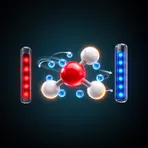
A number that shows how many electrons an atom has lost or gained in compounds and ions
Surface Forms
Morphology
The meaning 'degree or condition of oxidation' is directly and transparently built from 'oxidation' (the process/extent of losing electrons or gaining oxygen) plus 'state' (condition), so a learner who knows both constituents can infer the MWE's basic sense. Cross-linguistically this compositional pattern (e.g. Spanish 'estado de oxidación') is common, although precise numeric conventions (oxidation numbers) are specialized domain knowledge.
Etymology
The noun oxidation state comes from old chemistry: oxidation meant combining with oxygen, like metal turning into rust, and state means a condition. So oxidation state is the number that tells if an atom has 'lost' or 'gained' electrons, which is why chemists use it to show how electrons change in a reaction.