
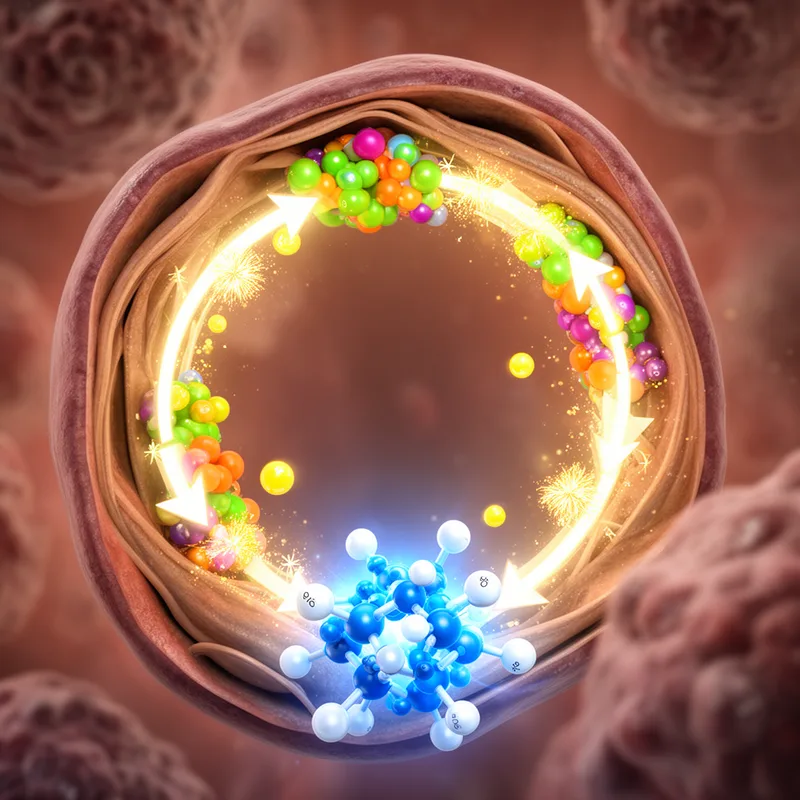
oxaloacetate


 1
9.5
- noun
- /ˌɑksəloʊəˈsɛteɪt/
- Specialized
- Research shows that oxaloacetate acts as an important intermediary in various metabolic pathways.
Examples
-
In the citric acid cycle, oxaloacetate combines with acetyl-CoA to initiate the energy production process.
-
The body converts carbohydrates into oxaloacetate, which plays a crucial role in metabolism.
-
Instead, what happens is you turn that oxaloacetate into aspartate.
-
So if we take oxaloacetate and make malate OK.
-
The liver can produce oxaloacetate via the amino acid aspartate, for example, through the enzyme aspartate aminotransferase.
Blog text (30) -
Because carbohydrates provide a source of oxaloacetate, which is needed for the TCA cycle (for those of you rusty on your science, the TCA cycle is used in many organisms in the production of energy).
Blog text (30)
Synonyms
 1
9.2
A chemical in cells that helps make energy from food
 1
7.9
An acid with four carbon atoms that helps cells make energy in the citric acid cycle
A chemical in cells that helps make energy from food
Surface Forms
Morphology
Etymology
The word oxaloacetate joins oxalo-, from oxalic named after a plant that tastes 'sour', and acetate, from acetic meaning 'vinegar' or 'acid'. So the name tells you it is a molecule made of acid parts, which helps explain why oxaloacetate is an important intermediate in the cell's energy cycle.