
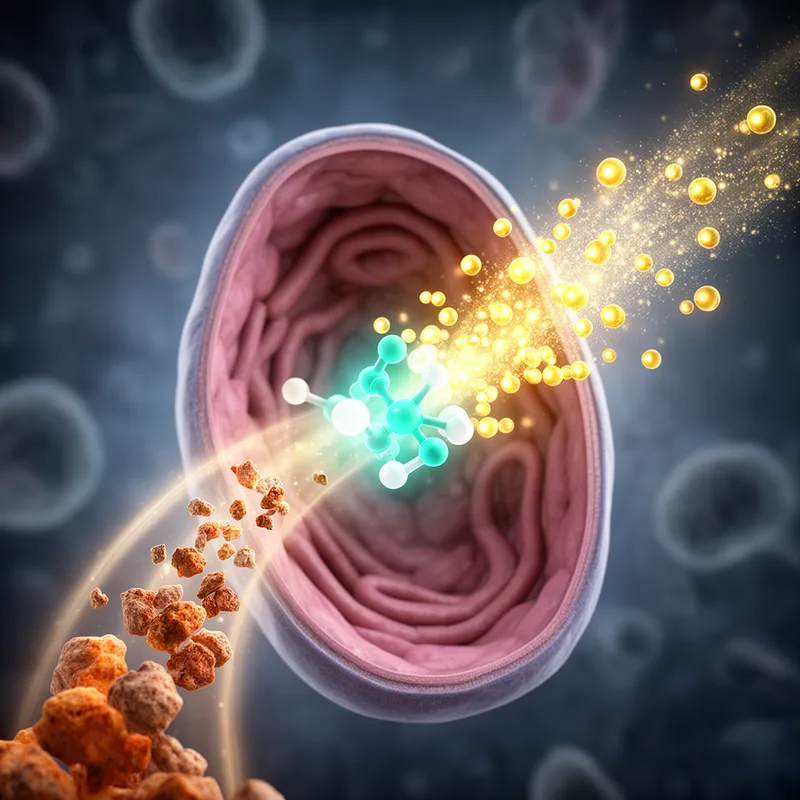
oxalacetate


 1
9.2
- noun
- /ˌɑksəˈlæsəˌteɪt/
- Specialized
- Some supplements contain oxalacetate for potential cognitive benefits.
Examples
-
Oxalacetate plays a crucial role in the citric acid cycle of cellular metabolism.
-
The oxalacetate levels in the sample were surprisingly high.
-
The transamination of aspartate produces oxalacetate in the body.
-
What is oxalacetate?
-
Research shows that oxalacetate plays a critical role in the Krebs cycle, helping to produce energy in cells.
-
In plants, oxalacetate is involved in the process of photosynthesis, converting light energy into chemical energy.
-
During the metabolic process, oxalacetate can be converted into glucose to provide energy for the organism.
Synonyms
 1
9.5
A chemical made in cells that helps in energy reactions like the citric acid cycle
 1
7.9
An acid with four carbon atoms that helps cells make energy in the citric acid cycle
A chemical in cells that helps make energy from food
Surface Forms
Morphology
Etymology
Oxalacetate comes from the parts oxal (an old plant name meaning 'sour' or 'acid') and acetate (from 'acetic', meaning 'vinegar'). So it is a chemical made of acid parts, which is why it is a salt or ester used in the cell's energy cycle.