
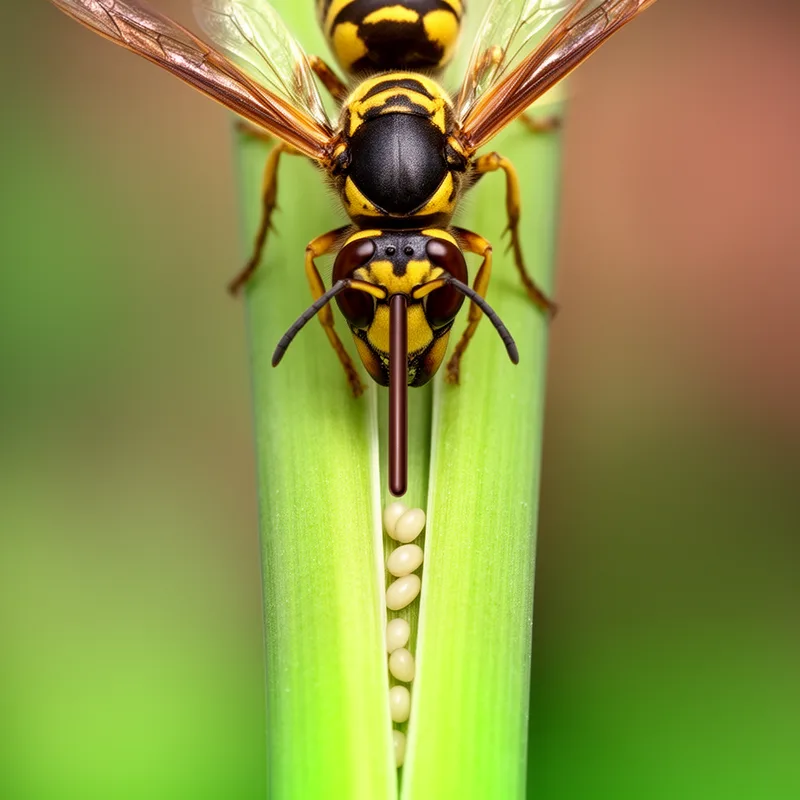
ovipositor
 1
9.9

- noun
- /ˌoʊvɪˈpɒzɪtər/
- Specialized
- Medflies ruin crops when fertile females use their tubelike ovipositors to punch holes in the skin of a ripening fruit or vegetable, then pump their eggs inside.
- use their ovipositor
Examples
-
The female Mexican fruit flies use their long ovipositor to lay eggs in a grapefruit.
-
As they ascend, the seahorses face each other with their tails bent back, and the female inserts her ovipositor into the open pouch of the male and releases her eggs in a long, sticky string.
Academic text (1990) -
You can see her long ovipositor, and here she is on an insect larva and she is injecting an egg into it.
-
The female inserts her ovipositor into the male's brood pouch.
-
Females use their tubelike ovipositors to pump tiny eggs into the flesh of ripening fruits and vegetables.
Academic text (1998) -
Female Mexican fruit flies (Anastrepha ludens) use their long ovipositors to lay eggs in a grapefruit.
Academic text (2011) -
Each female wasp lays dozens of eggs inside a caterpillar by inserting her slender ovipositor through the caterpillar's cuticle.
-
Females use their tubelike ovipositors to pump tiny eggs into the flesh of ripening fruits and vegetables.
Synonyms


 1
8.1
A tube in female animals that carries eggs from the ovary to the womb or outside the body
Surface Forms
Morphology
Etymology
The word ovipositor comes from ovi- meaning 'egg' and -positor from a root meaning 'to place', as in deposit. So an ovipositor is the tube-like organ a female animal uses to 'place' or lay eggs.