

to oviposit
9.9
To lay eggs, usually by insects and other small animals
- verb
- /ˌoʊvɪˈpɪzɪt/
- Specialized
:
oviponer
- The female butterfly will oviposit her eggs on the underside of leaves to keep them safe from predators.
Examples
-
Wood et al. (1990) reported that when treehoppers were forced to oviposit in novel plants, the eggs hatched in relation to the phenology of the adopted rather than the parental host.
Academic text (1996) -
The scientist observed the wasps oviposit into the bark of the tree, ensuring the larvae would have food.
-
During the breeding season, the frog oviposits thousands of eggs in the pond.
Synonyms
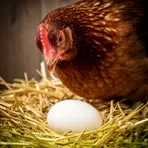
to lay
vsto oviposit
 411
2.4
411
2.4

To produce eggs and put them in a nest or on the ground
is a formal term mainly used for insects and similar animals

to spawn
vsto oviposit
27
4.8
To lay eggs in water like fish or frogs do
is mainly used for insects rather than water-based egg release
 10
9.9
10
9.9
To lay eggs on meat or a dead animal
is broader and not limited to meat or carrion as a site

to lay an egg
vsto oviposit
6
2.0
To make and leave an egg outside the body
is the more formal verb used generally rather than the casual single-egg phrase
Surface Forms
oviposit infinitive
oviposited past
oviposited past participle
ovipositing present participle
oviposits third person singular
Morphology
Etymology
Oviposit comes from two parts: ovi- meaning 'egg' and -posit meaning 'to place' or 'put', like in deposit. So to oviposit is to 'place' or lay eggs, which is why we use this word for insects and similar animals.