
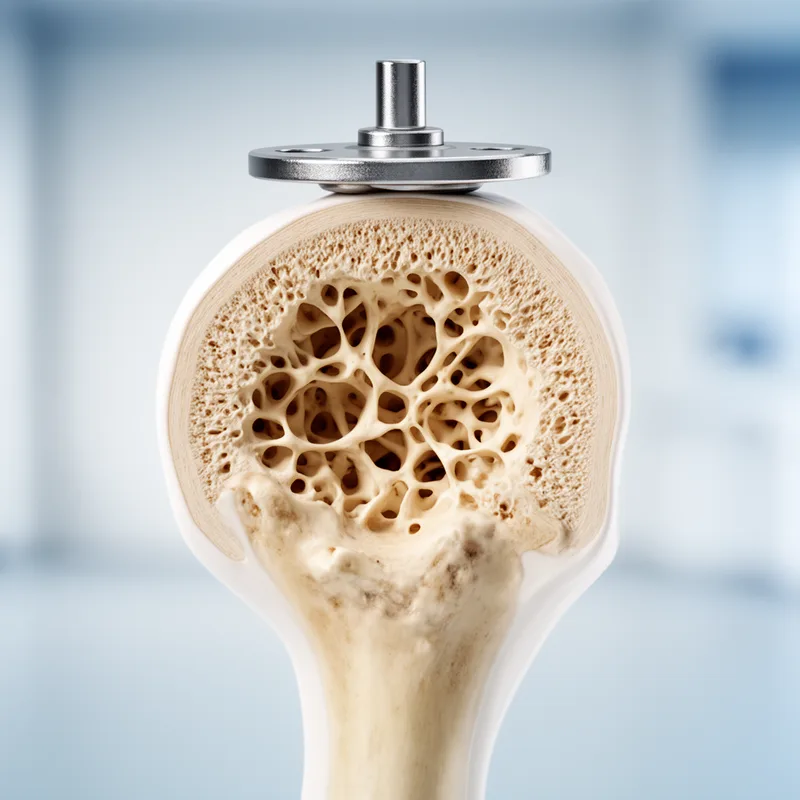
osseous tissue
- noun
- /ˈɑːsiəs ˈtɪʃuː/
- Specialized
- Osteoporosis is a disease that weakens the osseous tissue in the bones, making them fragile.
Examples
-
Scientists study osseous tissue to understand bone growth and repair in mammals.
-
The surgeon explained that osseous tissue regeneration would be essential for the patient's recovery.
-
The osseous tissue provides strength to bones.
-
During the examination, we observed osseous tissues in the sample.
-
Osteoporosis is a disease that weakens the osseous tissue in the bones, making them fragile.
-
Scientists study osseous tissue to understand bone growth and repair in mammals.
-
The surgeon explained that osseous tissue regeneration would be essential for the patient's recovery.
Synonyms

 ∞
1.0
∞
1.0

A hard part inside the body that forms the skeleton

A hard part inside the body that forms the skeleton
Surface Forms
Morphology
The meaning is directly compositional: 'osseous' means 'pertaining to bone' and 'tissue' means 'a group of cells', so a learner who knows both constituents can infer 'tissue made of bone'. This follows a regular adjective+noun pattern and has clear cognates in other languages (e.g., Spanish 'tejido óseo', French 'tissu osseux'), supporting full transparency.
Etymology
Osseous tissue comes from the Latin word os meaning 'bone', so it simply means the hard tissue that makes up bones. That's why the phrase refers to the strong material that gives bones their shape.