
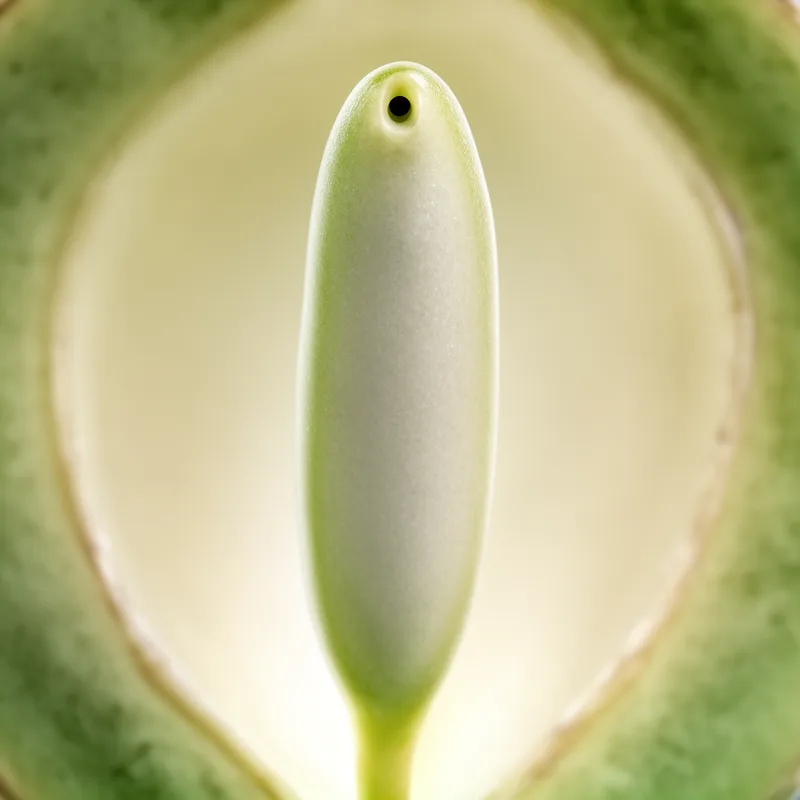
orthotropous
- adjective
- /ˌɔrθəˈtrōpəs/
- Specialized
- Under the microscope, the orthotropous structure of the ovule was clearly visible.
Examples
-
The botanist explained how an orthotropous ovule differs from an anatropous one.
-
In orchids, an orthotropous ovule is a straight structure with the micropyle at the top.
-
In orchids, an orthotropous ovule is rare compared to other ovule types.
-
The orthotropous ovule is essential for proper seed development.
-
An orthotropous ovule ensures that the micropyle is aligned correctly.
-
The botanist explained that an orthotropous ovule has a straightforward alignment unlike other types.
-
Under the microscope, the orthotropous shape of the ovule made its anatomy easy to observe.
Antonyms

- Specialized
A curved seed part with a tiny opening near the base almost touching the stalk
Compounds

- Specialized
A part inside a flower that becomes a seed and stays straight with its opening at the top
How Straight


Surface Forms
Morphology
orthotropous = orthotropic (opaque) = ortho + trop + ous
Formation from a recognizable technical base ('orthotropic') by replacing or adding an adjectival ending is regular, though the exact botanical application is specialized.
Etymology
Orthotropous comes from the Greek parts ortho- meaning 'straight' and -tropous meaning 'turn', the same 'turn' you see in 'tropic' when plants turn toward light. So an orthotropous ovule stays straight, not bent, with its small opening, the micropyle, at the top.