

orthodox
 30
5.9
30
5.9

- adjective
- /ˈɔrθəˌdɑks/
- In my book, I elaborate on and defend what I call the orthodox view of human rights.
- orthodox Christian
- orthodox Marxism
- orthodox Islam
Loading YouTube…
Watch on YouTubeSaint Thomas Aquinas is the primary orthodox theologian of Catholicism.
- Saint Thomas Aquinas is the primary orthodox theologian of Catholicism.
- So the Bitcoin Standard is a good introduction to sort of the orthodox thought in Bitcoin.
- I mean, some do, but, but obviously more orthodox Muslims don't drink because it's Haram to them.
- You know, women are not allowed to be imams in Orthodox Islam.
- And I haven't found it in the the orthodox paradigm of modern neuroscience at all.
- Christianity, or the Orthodox or Catholic view, is that Christ and God are of the same substance.
- But Kiev is one of the places where an Orthodox world, an Eastern Christian world, is bouncing up against these Western trends.
- Yes, He has an absolute fear of Islamic individuals who are definitely Orthodox, so people who are very heavily into their religion.
- And from now, I'm not a Orthodox Stoic philosopher.
- So time goes on and over time it becomes much more orthodox in temples.
- So where can we get the Stoic official orthodox position?
- So all the very good challenge and complementary perspective to a more orthodox training.
Examples
-
In our view, however, they have great difficulty arguing that they are representing traditional, orthodox Christology.
Academic text (1991) -
You know, women are not allowed to be imams in Orthodox Islam.
-
And, you know, my family is very orthodox, but really smart.
-
In fact, I think he was raised orthodox.
-
In the Orthodox tradition, we're not allowed to answer the phone.
-
And it's also interesting that Tuesday is also a popular day for Orthodox Jewish weddings.
-
Another copy of this work has an elderly Russian Orthodox Church leader in black entering the door.
Academic text (1999) -
There are two rooms for teachers: one for orthodox teachers, the other for non-orthodox.
Fiction book (1992) -
Following on from this principle, the report focused on the centrality of ecclesiology in orthodox thought.
Academic text (1991) -
In an orthodox Christian community, many traditions are strictly followed during worship.
Synonyms
 994
1.5
994
1.5
Following long-held customs and ways of doing things
 175
2.8
175
2.8
Doing things in the usual way most people expect, not new or original
 4
7.9
4
7.9
In line with accepted rules or standards

Believing in and following traditional practices

Being loyal to old customs and beliefs in religion and culture
Antonyms

Compounds
 13
3.5
13
3.5
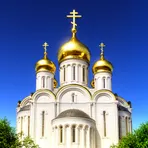
A group of Christian churches that follow old Byzantine worship and traditions


 2
4.1
2
4.1
A large Eastern Christian church in Russia led by a church leader called the Patriarch
 1
5.4
1
5.4
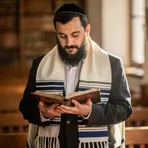
A branch of Judaism that follows traditional Jewish laws and customs strictly
 1
4.1
1
4.1
The main Christian church in Greece that follows the Eastern Orthodox tradition


 1
3.7
1
3.7
A group of Christian churches that follow Eastern ways of worship and do not accept the Pope's authority


A Christian church in Armenia that began around year 300 and keeps old traditions
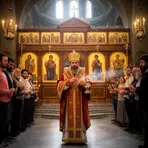
A Christian church also called the Eastern Orthodox Church that follows Byzantine rites

- Archaic
A stage of sleep without quick eye movements or dreaming when the body repairs itself
How Orthodox

Surface Forms
Morphology
orthodox = ortho + dox
Although analyzable into Greek combining forms ('ortho-' + '-dox'), those parts are not productive standalone English words for B1 learners, so the meaning 'conforming to accepted beliefs' is not reliably inferable from the parts.
Etymology
Orthodox comes from two Greek parts: ortho- meaning 'straight' or 'correct' and doxa meaning 'opinion' or 'belief', and you can see ortho- in orthodontist ('straight' teeth). So, orthodox means 'correct belief', which is why we use it for ideas or practices that follow the traditional or generally accepted views.