
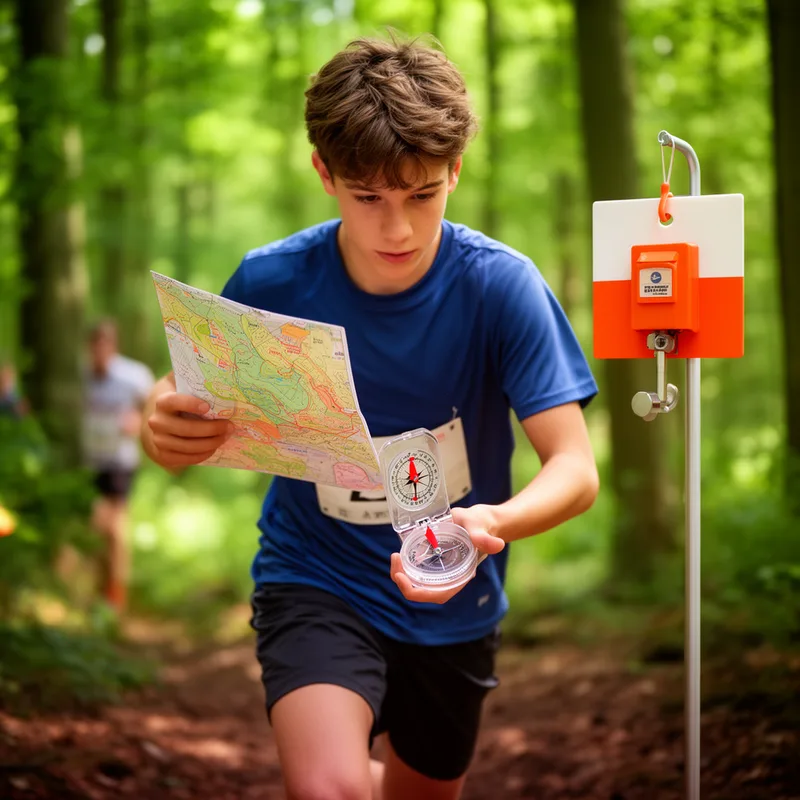
to orienteer


 1
7.1
- verb
- /ɔːrɪənˈtɪr/
- He loves to orienteer during summer camp, exploring new trails with his friends.
Examples
-
As predicted, it was also more difficult for participants to judge whether different symbols were orienteering symbols or not, whereas it was easier for them to make these judgments about definitions and words.
Academic text (2003) -
We approached them either before they went orienteering or after they had returned from their course.
Academic text (2003) -
In short, individuals who had been orienteering for more years tended to do better than individuals who were just doing higher courses but were perhaps not as experienced.
Academic text (2003) -
You start with no map, compass, or even a watch, meaning you have to orienteer and navigate your way on your own wits until you can find these items and start to tame the place.
Blog text (13) -
For example, bowling and cross-country skiing may take place in the gym, biking on the campus grounds, and camping and orienteering indoors and outdoors are all possible with some creative instructional planning.
Academic text (2006) -
She decided to orienteer in the forest, carefully following the map and compass.
-
On weekends, many families go out to orienteer in the nearby hills, enjoying both the sport and nature.
Surface Forms
Etymology
Orienteer as a verb comes from the same root orient ('to find direction') and from the name of the sport, which began as practice with map and compass. So to orienteer is to take part in that sport and 'find your way' across unknown land.