

oriental alabaster
- noun
- /ˌɔːrɪˈɛntəl ˈæləbæstər/
- Specialized
- The ancient vase was carved from oriental alabaster and glowed softly in the light.
Examples
-
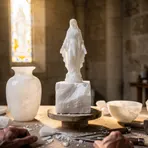
The statue was carved from oriental alabaster.
-
The statue was made of oriental alabaster, giving it a unique, translucent quality.
-
Sculptors prized oriental alabaster for its smooth texture and natural beauty.
-
Many artists prefer oriental alabaster for its beauty.
-
The artist chose a piece of oriental alabaster for his latest sculpture due to its beautiful translucence.
-
She decorated her home with a stunning lamp made from oriental alabaster that casts a warm glow.
-
The ancient craftsmen skillfully carved intricate designs into the oriental alabaster to create exquisite vases.
Synonyms
 4
8.1
4
8.1

A smooth white rock used for carving statues and decorations
Surface Forms
Morphology
The phrase is a straightforward adjective + noun composition: 'oriental' (from the East) combined with 'alabaster' (a carving stone) yields a type or variety of alabaster associated with the East. This compositional pattern is cross-linguistically common and the overall meaning is directly derivable by a B1 learner who knows both constituents.
Etymology
Oriental alabaster comes from two simple images: alabaster is a smooth, pale stone long used for carving statues and lamps, and oriental means 'from the East'. So, oriental alabaster refers to a pale, slightly 'see-through' stone from the East that artists used for decorative carving.