

organ of speech


 1
4.4
1
4.4
- noun
- /ˈɔrɡən əv spiːch/
- The development of a child's organs of speech is crucial for their ability to form sounds and speak clearly.
Examples
-
Our subject, William, was born without the organs of speech.
-
Next to the organ of speech, the mouth, it is the hand most of all by which a man manifests and actualizes himself.
-
The use of metered constructions offered a means to discipline the unformed organs of speech.
Academic text (2005) -
Answer: No reward is gained because the sound does not come from the mouth of a human being, and the Quranic sound that one hears from the phonograph is not produced by the human organ of speech. #3.
Academic text (2018) -
Humans use their organs of speech, like the tongue and lips, to communicate effectively.
-
Children often learn to articulate words with the help of their organs of speech during speech therapy.
Synonyms

A body part like the tongue or lips that makes speech sounds
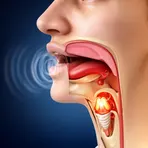
A part of the mouth or throat that helps make speech sounds

A part in the mouth like the tongue or lips that helps make speech sounds
Surface Forms
Morphology
The meaning is directly compositional: 'organ' (a body part performing a function) combined with 'speech' (the act or capacity of speaking) linked by the relational 'of' yields 'a body part used for speech.' This genitive/relational pattern is common cross-linguistically, so a B1 learner who knows the constituent words can readily infer the intended meaning (e.g. tongue, lips, vocal cords).
Etymology
Organ of speech uses 'organ' to mean a body part that does a job, and it points to parts like the tongue, lips and vocal cords that make sounds. That's why the phrase means the body parts used 'to speak'.