
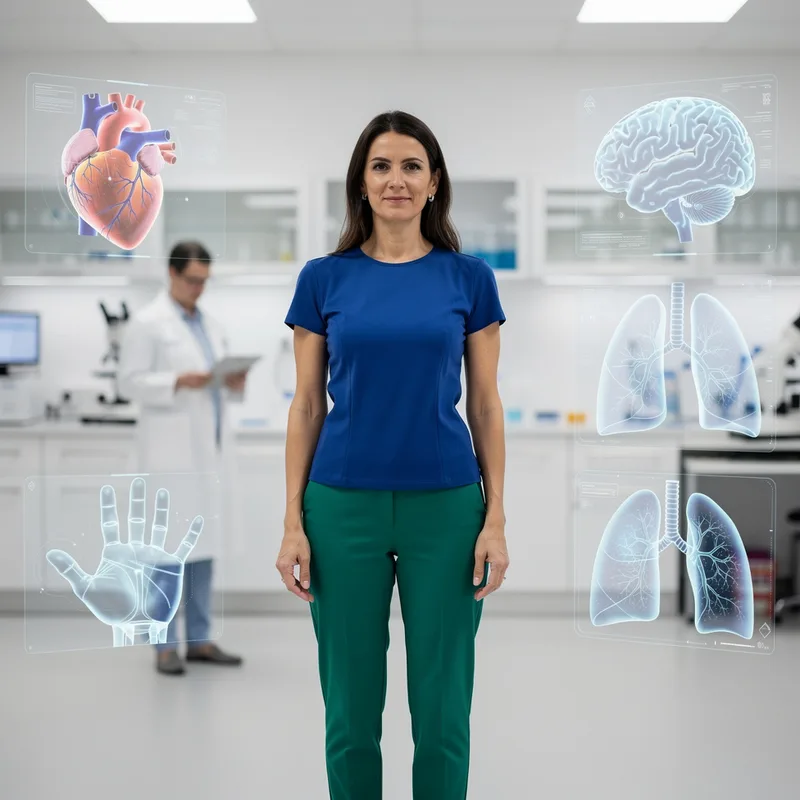
organismic
 1
8.1

- adjective
- /ɔrˈɡænɪzəmɪk/
- Specialized
- Understanding human behavior requires an organismic perspective that considers individuals as integrated wholes.
- organismic variable
- organismic biology
- organismic and mechanistic
Examples
-
As a result, there has been a shift to view organismic and mechanistic metatheories within a contextual framework.
Academic text (2003) -
Constructivism and maturational theory are both examples of organismic theories.
Academic text (2003) -
To align ourselves with that deeper organismic identity of the universe is our great task.
Academic text (2001) -
During this process, the original organismic wholeness of the child turns into an assemblage of parts.
Academic text (2000) -
Epigenetic specifications are sometimes transmitted across organismic generations.
Academic text (1996) -
There are three metatheories associated with child development: mechanistic, organismic, and contextual.
Academic text (2003) -
Piaget's terminology may be vague, but his views based on genetic epistemology are consistent with organismic biological functioning.
Academic text (1995) -
If the Earth System is a clockwork at all, then it is an organismic one that baffles our best anticipatory capacities.
Academic text (2005) -
Thus, diverse organismic characteristics, not otherwise relatable, are presumed to covary along a single dimension.
Academic text (1990) -
In making a diagnosis of malignant neoplasm at the organismic level, the pathologist requires only two of the four characteristics of malignancy.
Academic text (1993)
Synonyms
 1
8.1
Relating to the whole living thing rather than its parts
Treating a system as a single living whole rather than separate parts
Antonyms


Surface Forms
Morphology
Etymology
The word organismic comes from organism, which comes from a Greek word organon meaning 'tool' or 'instrument' and is related to the everyday word organ, meaning a body part or a musical instrument. So, to be organismic is to see something as a 'whole' made of parts that work together.