
order Equisetales
- noun
- /ˈɔrdər ˌɛkwɪˈseɪteɪlz/
- Specialized
- The order Equisetales includes only one living genus, Equisetum, commonly known as horsetails.
Examples
-
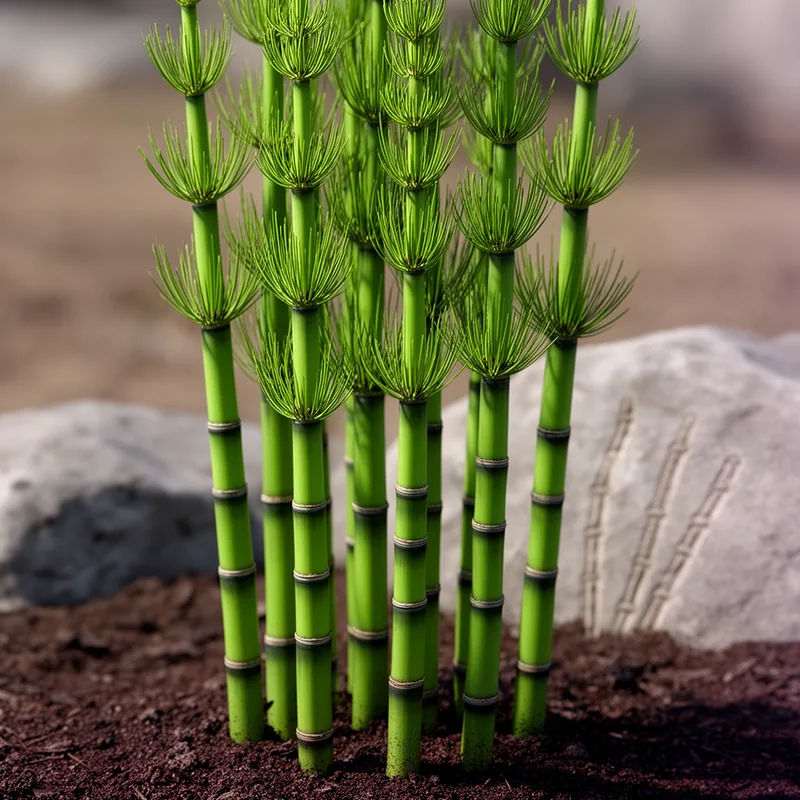
Members of the order Equisetales are characterized by their jointed stems and brush-like appearance.
-
Fossils of the order Equisetales have been found in rocks dating back over 350 million years.
-
The order Equisetales is known for its distinctive jointed stems.
-
Many plants in the order Equisetales thrive in wet environments.
-
Fossils of the order Equisetales have been found in rocks dating back over 350 million years.
-
Members of the order Equisetales are characterized by their jointed stems and brush-like appearance.
-
The order Equisetales includes only one living genus, Equisetum, commonly known as horsetails.
Synonyms



 1
9.9
A group of ancient plants like horsetails that still grow today
Surface Forms
Morphology
The phrase combines 'order' (a taxonomic grouping) with 'Equisetales' (the horsetail plants), so its meaning — the taxonomic order consisting of Equisetales — is directly derivable from the constituents. This follows standard biological naming conventions (common across languages) and is therefore immediately comprehensible to a learner who knows both words.
Etymology
Order Equisetales is the name for the group of plants known as horsetails. The word Equisetales comes from Latin for 'horse's tail' because their jointed, brush-like stems look like a horse's tail, so the phrase names that group of plants.