
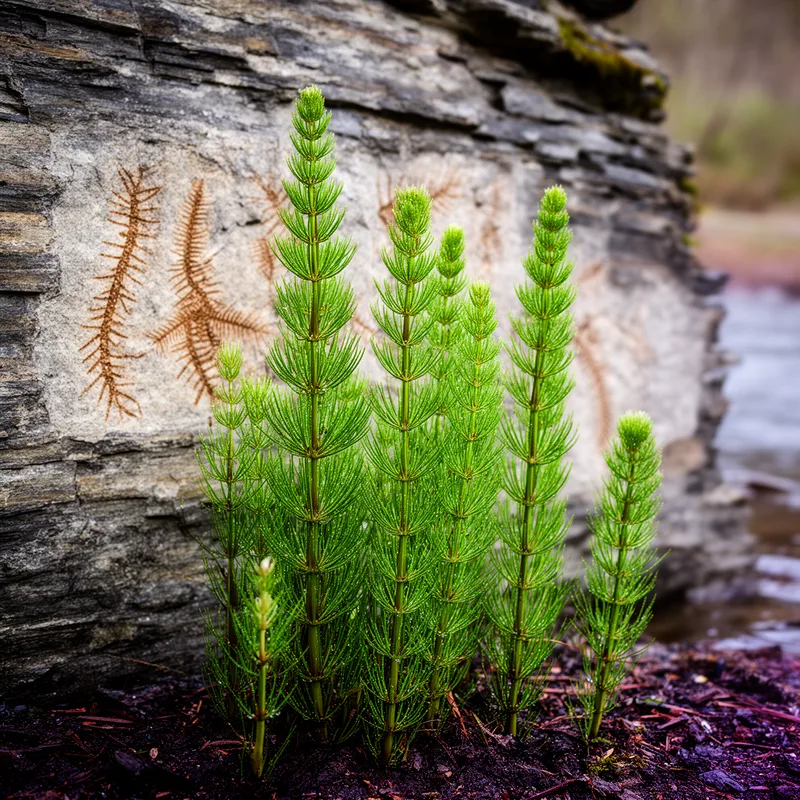
Equisetales


 1
9.9
- noun
- /ˌɛkwɪˈseɪteɪlz/
- Specialized
- Many members of the Equisetales order, like horsetails, still grow today.
Examples
-
The Equisetales are often found in wetland areas.
-
Paleobotanists study Equisetales to learn about ancient plant evolution.
-
Fossils show that Equisetales have persisted since the Devonian period.
-
Did you know that Equisetales date back to the Devonian period?
-
The Equisetales, commonly referred to as horsetails, can often be found in wetland areas.
-
Some species of Equisetales are known for their distinctive jointed stems and rough texture.
-
The Equisetales are fascinating plants that have survived for millions of years, dating back to the Devonian period.
Synonyms
A group of plants with jointed stems that includes horsetails
Compounds
Surface Forms
Morphology
Etymology
Equisetales comes from Latin parts equi- 'horse' and seta 'bristle', so it means 'horse-bristle' and refers to the plants' long, thin stems that look like a horse's tail; that's why plants in this order are called horsetails and why the name fits these very ancient plants.