

orb web
- noun
- /ɔrb wɛb/
- Specialized
- A typical radial thread of an ecribellate orb web is about 5 microns (a micron is a thousandth of a millimeter).
Examples
-
This finding surprised us since the sticky orb webs of ecribellate spiders were readily available.
Academic text (1994) -
Photo (color): Stationed in the middle of her orb web, an Argiope scrub spider awaits visitors.
Academic text (1993) -
Enter the ecribellate spiders, stars of the spider world with their elegant engineering, typified by the orb web, a radial array of support threads on which is laid a spiral capture thread.
Academic text (1994) -
The garden spider skillfully spun her orb web between two trees, creating a beautiful natural trap for unsuspecting insects.
-
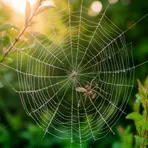
An orb web glistened with morning dew, its intricate pattern shining in the sunlight as the spider waited for prey.
-
Many spiders create orb webs that consist of radial lines and spirals, making them highly effective for catching flying insects.
Synonyms

 71
1.0
71
1.0

A thin, flat part joining other parts, for example a spider's net or skin between toes
 15
1.4
15
1.4
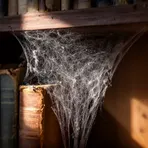
A dusty net spiders make that hangs in old unused places
 8
1.4
8
1.4
A fine silk net that a spider makes to catch insects
 2
1.0
2
1.0
A net of thin sticky threads made by a spider to catch insects
 2
1.0
2
1.0
A fine net of silk that a spider makes to catch insects
How Circular

Surface Forms
Morphology
The meaning 'a circular spider web' is directly and transparently derived from combining 'orb' (round/spherical) with 'web' (a spider's net), following a common noun+noun type-of compounding pattern. This compositional relation is regular and cross-linguistically common, so a B1 learner who knows both constituents can infer the MWE's meaning.
Etymology
The name orb web describes the round spider web many garden spiders make. The word orb means 'round' and web means 'spider net', so the picture of spokes and spiral threads helps you remember that it means the circular web a spider builds.