

cobweb
 15
1.4
15
1.4

- noun
- /ˈkɑːbˌwɛb/
- Everything in the room is caked with dust and cobwebs, save for the burning candle.
- dust and cobwebs
- cobwebs covering
- clear the cobwebs
Loading YouTube…
Watch on YouTubeAnd these adhesions are cobwebs of scar tissue that line the abdomen.
- And these adhesions are cobwebs of scar tissue that line the abdomen.
- It's not, it's, it's, it's just a cobweb clear.
Examples
-
You know what happens when cobwebs are not regularly swept away.
-
There were layers and layers of dust on everything, and even cobwebs around the windows and in the corners.
Fiction book (1995) -
A piece of cobweb is hanging down right there.
-
Let her catch sight of a cobweb, and she would not rest until she'd killed it dead.
Fiction book (1998) -
Are those cobwebs in your hair?
-
Oh, have you ever seen so many old cobwebs?
-
We've got a cobweb large enough to snag a sheep.
-
In the corners of my room, there are elaborate cobwebs, but I haven't seen any spiders.
Fiction book (1997) -
But mostly, the basement stood deserted, hung with cobwebs, and was invaded each year by families of field mice.
Fiction book (1990) -
The neglected attic was filled with dusty cobwebs that looked ancient and frail.
Synonyms
 71
1.0
71
1.0
A thin, flat part joining other parts, for example a spider's net or skin between toes
 8
1.4
8
1.4
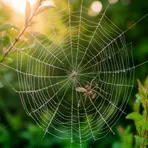
A fine silk net that a spider makes to catch insects
 2
1.0
2
1.0
A net of thin sticky threads made by a spider to catch insects
 2
1.0
2
1.0
A fine net of silk that a spider makes to catch insects
How Delicate


Surface Forms
Morphology
Etymology
Cobweb comes from an old word cob once used for a 'spider', joined with web, so it originally meant a 'spider web'. That's why cobweb usually means the dusty, old web you find in corners.