

optical disk
 1
3.7
1
3.7

- noun
- /ˈɑptɪkəl dɪsk/
- Specialized
- Furthermore, optical disks are extremely robust and relatively impervious to wear or to standard magnetic fields.
- optical disk drives
- optical disk media
Examples
-
Many people still use an optical disk to store their favorite movies and music collections.
-
The only ones not destroyed will be those on optical disks or those extremely well protected against magnetic fields.
Blog text (29) -
In this paper, we review the technology behind the optical disk drives used in IBM's optical storage systems.
Academic text (1996) -
Most current optical disks consist of tracks separated by grooves.
Academic text (1996) -
Optical disk drives provide an effective solution to the growing need for removable high-capacity storage.
Academic text (1996) -
Current examples of optical disks include compact disk-read only memory (CD-ROM), compact disk-read/write (CD-R/W), and DVD.
Blog text (19) -
He saved his important files on several optical disks to ensure they would not be lost.
-
The optical disk can hold large amounts of data and is often used for data backups.
Synonyms
 396
1.4
396
1.4
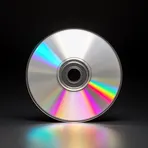
A small round disc that stores music and other digital files
 12
2.5
12
2.5
A small round shiny disc that stores music, videos, or computer files read by a laser

A disc you can erase and write many times using light and magnets to store data
How Much

Surface Forms
Morphology
The compound is directly compositional: 'optical' (related to light/optics) combined with 'disk' (a round plate) yields a disk that operates by optical means — i.e. media like CDs/DVDs read by lasers. This technical but transparent formation is common cross-linguistically, so a B1 learner who knows both constituents can reasonably infer the intended meaning.
Etymology
Optical disk: The noun optical disk comes from how it works: a flat disk is read by a beam of light, so 'optical' means 'using light'. That's why the name is used for a round plate that 'stores data' and is 'read by light'.