
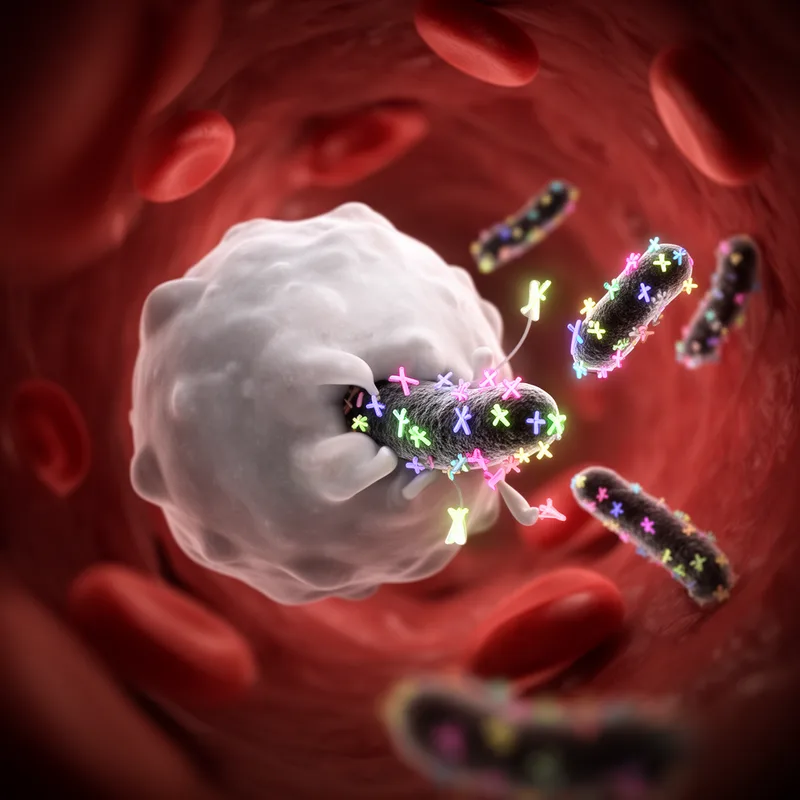
to opsonize


 1
9.9
- verb
- /ˈɑːpsəˌnaɪz/
- Specialized
- Certain proteins in the immune system can opsonize pathogens, aiding in their clearance.
Examples
-
If a cell is opsonized, it will be more rapidly engulfed by macrophages.
-
Antibodies opsonize bacteria to make them easier targets for phagocytes.
-
The antibodies opsonize the bacteria for destruction.
-
How do antibodies opsonize pathogens?
-
The vaccine helps to opsonize the bacteria, making them easier for the immune system to target.
-
When pathogens are opsonized by antibodies, they are more efficiently consumed by immune cells.
-
The immune system uses specific molecules to opsonize foreign particles, marking them for destruction.
Surface Forms
Morphology
opsonize = opsonin (opaque) = opson + ize
The verb is formed with the productive suffix '-ize' from a technical biomedical base ('opsonin' / opson-), which is not a recognizable everyday morpheme for average learners.
Etymology
Opsonize comes from the Greek root opson-, which meant 'food' or 'something tasty', so imagine the immune system 'making something tasty' for the cells that eat invaders. So, to opsonize is to mark a germ or cell so it becomes easier for the body's eating cells to swallow and destroy it.