
opsonin


 1
9.9
- noun
- /ˈɑːpsənɪn/
- Specialized
- The presence of opsonin in the serum enhanced the destruction of bacteria by the immune system.
Examples
-
Deficiency in opsonin production can lead to increased susceptibility to certain infections.
-
Scientists measured the level of opsonin to assess the body's response to infection.
-
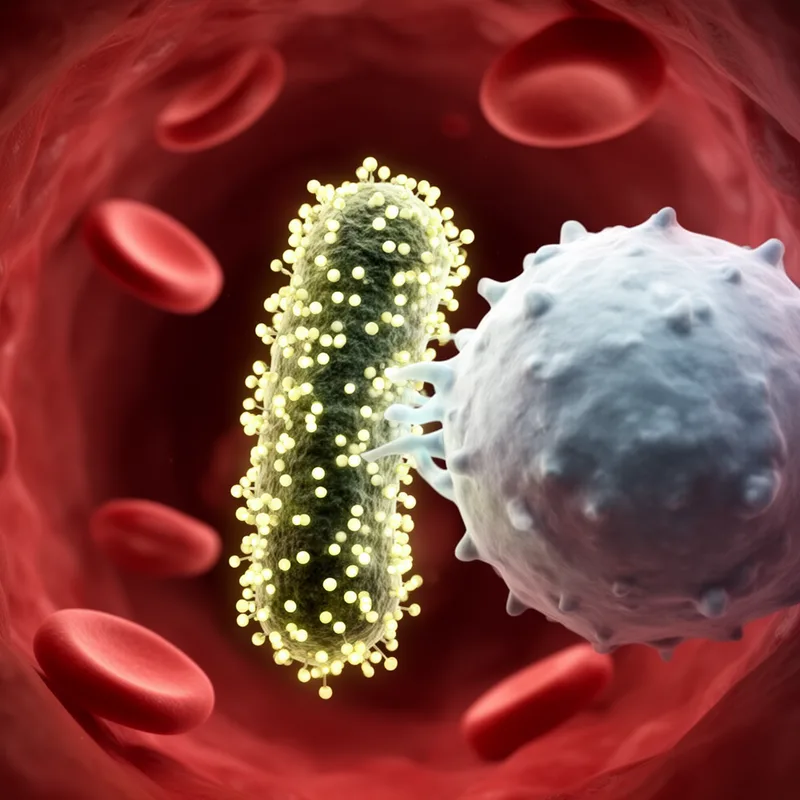
The opsonin helps the immune system identify pathogens.
-
In the lab, we tested various opsonins for their effectiveness.
-
The injection contained opsonins that improved the body's ability to fight off infections more effectively.
-
In immunology, opsonins play a vital role by marking foreign invaders for destruction by immune cells.
-
Opsonization: the process by which bacteria are altered by opsonins, products of complement activation in blood serum, which makes them more susceptible to phagocytes.
Synonyms
 23
3.3
A protein made by the body that helps destroy germs like bacteria and viruses
Surface Forms
Morphology
opsonin = opson (opaque) = opson + in
The base element 'opson' is a specialized combining form not recognizable as a standalone English word to average learners, so the relation to the meaning is not clear.
Etymology
Opsonin comes from the Greek root opson meaning 'sauce' or 'food'. A helpful image is to think of an opsonin as a 'sauce' that coats germs to make them 'tasty' for the immune cells that eat them, so it helps the body remove invaders.