
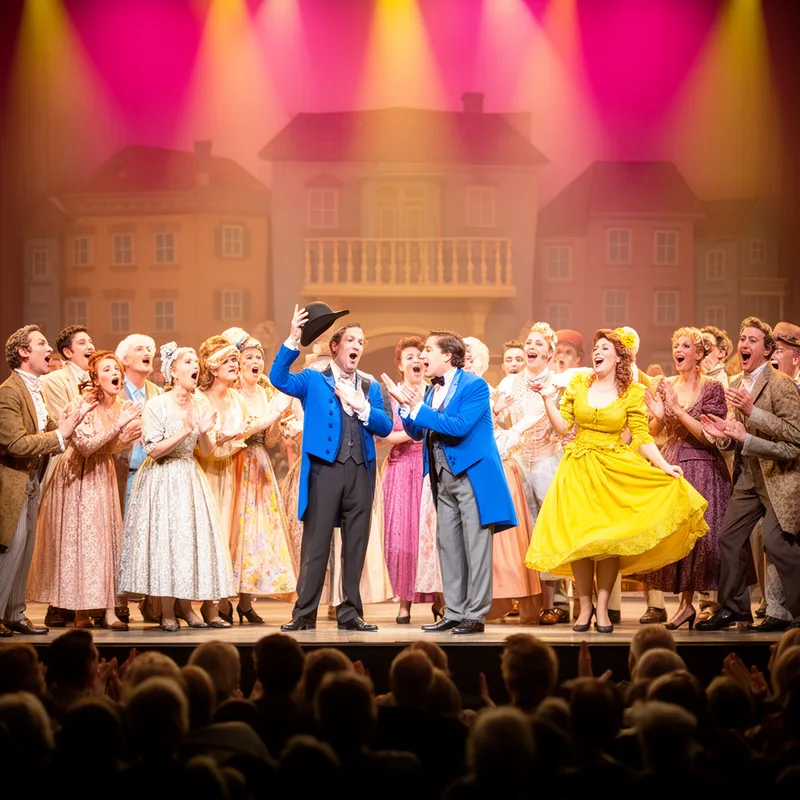
opera bouffe
- noun
- /ˈɑːpərə bʊf/
- The new opera bouffe was a delightful experience.
Examples
-
The local theater is performing an opera bouffe famous for its witty satire and playful melodies.
-
His favorite composer specialized in opera bouffe, delighting audiences with humor and charm.
-
She prefers the lively atmosphere of opera bouffe to the seriousness of grand opera.
-
I love attending opera bouffes during the summer.
-
The audience laughed throughout the performance, as it was a delightful opera bouffe filled with witty dialogue and amusing characters.
-
Many opera bouffe productions include comical situations that keep the audience entertained until the happy ending.
-
The play he wrote was a lighthearted opera bouffe, featuring charming songs and plenty of humorous exchanges.
Synonyms

 5
7.3
5
7.3

A short, light stage musical with spoken parts and songs that is often funny
 1
5.0
1
5.0
A stage show with singing and spoken lines that is funny and ends happily
 1
5.3
1
5.3
A short, funny musical play with singing and a light story
A short funny opera with some spoken words and a happy ending
A French musical play with songs, talking parts, and a happy ending

A light, funny Italian opera with lively music
How Comic

Surface Forms
Morphology
The meaning is directly compositional: 'opera' (a staged sung drama) combined with 'bouffe' (a light/comic opera) yields 'a comic or light opera', which matches the provided definition. Although 'bouffe' is a French loanword, the semantic contribution of each constituent is clear and cross-linguistically predictable, so a B1 learner who knows both words would understand the MWE.
Etymology
The noun opera bouffe comes from French: opera means a musical show and bouffe comes from a word for 'clown' or 'comic'. Imagine clowns singing and making jokes on stage, and you can see why it means a light, funny opera with a happy ending.