

opera comique
- noun
- /ˈɑːpərə kəˈmiːk/
- Specialized
- Unlike grand opera, an opera comique includes spoken dialogue between musical numbers.
Examples
-
The company's next production is a classic opera comique featuring sparkling French melodies.
-
She specializes in singing leading roles in opera comique because of her strong acting skills.
-
The opera comique was a delightful experience.
-
Have you ever attended an opera comique?
-
The opera comique often combines humor and music to create a lighthearted theatrical experience.
-
Many children enjoy watching opera comique because of its entertaining stories and lively characters.
-
She first fell in love with opera comique after attending a delightful performance with her family.
Synonyms

 5
7.3
5
7.3

A short, light stage musical with spoken parts and songs that is often funny
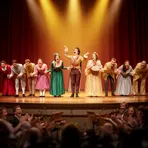 1
5.0
1
5.0
A stage show with singing and spoken lines that is funny and ends happily
 1
5.3
1
5.3
A short, funny musical play with singing and a light story
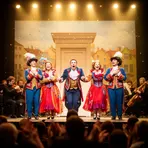
A short funny opera with some spoken words and a happy ending
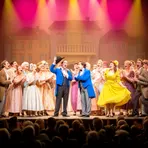
A funny musical play with singing and talking that ends happily
How Comic

Surface Forms
Morphology
opera + comique
The phrase is a straightforward combination of 'opera' and French 'comique' (a cognate of English 'comic'), so a learner who knows both constituents can infer it denotes a comic or light opera. Although the dictionary entry notes specific genre features (spoken dialogue, often a happy ending), the core meaning is transparently derived from the parts and matches the cross-linguistic concept of a 'comic opera'.
Etymology
Opera comique comes from French theatre where shows mixed singing and spoken words. The word comique means 'comic' or light, so the name told audiences the show was lighter and often ended happily, and that's why opera comique means 'a type of opera with spoken dialogue and usually a happy ending'.