
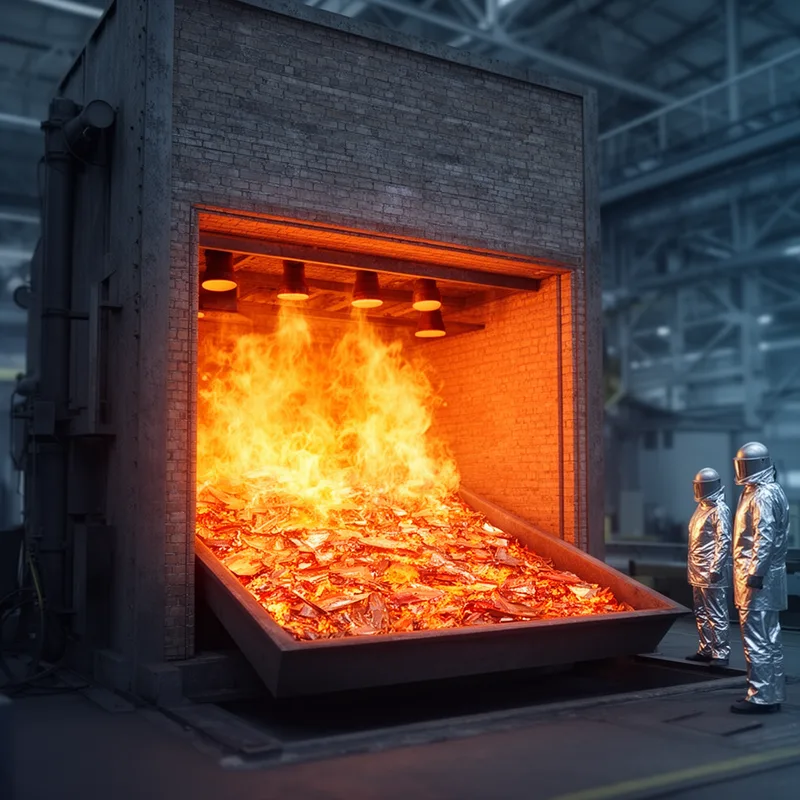
open-hearth furnace
- noun
- /ˈoʊpənˌhɑrθ ˈfɜrnɪs/
- Archaic
- The open-hearth furnace was revolutionary for steel production.
Examples
-
Compared to modern electric furnaces, the open-hearth furnace was slower but allowed more precise control over composition.
-
Engineers maintained the open-hearth furnace to ensure a consistent production of high-quality steel.
-
The open-hearth furnace revolutionized steelmaking in the late nineteenth century.
-
Many factories still use the open-hearth furnaces for efficiency.
-
The open-hearth furnace is a crucial part of the steelmaking process, where steel is melted and formed.
-
Workers carefully monitor the temperature of the open-hearth furnace to ensure high-quality steel production.
-
In the past, open-hearth furnaces were the primary method for producing steel on a large scale.
Synonyms
 93
4.1
93
4.1

A closed chamber that makes very high heat for melting metal, burning waste or heating buildings

A furnace that heats metal by flames reflected from its roof and walls
Surface Forms
Morphology
open-hearth + furnace
The term is a literal compound: 'open' + 'hearth' + 'furnace' describes a furnace that has an open hearth for heating. This straightforward, descriptive composition follows regular English compounding patterns, so a B1 learner who knows the constituent words would readily infer the meaning.
Etymology
Open-hearth furnace comes from the simple picture of a shallow hearth left open to the flames, where bars of metal lay while workers heated them. That's why the name means a furnace used to make 'steel' by heating metal on a shallow hearth with open flames.