
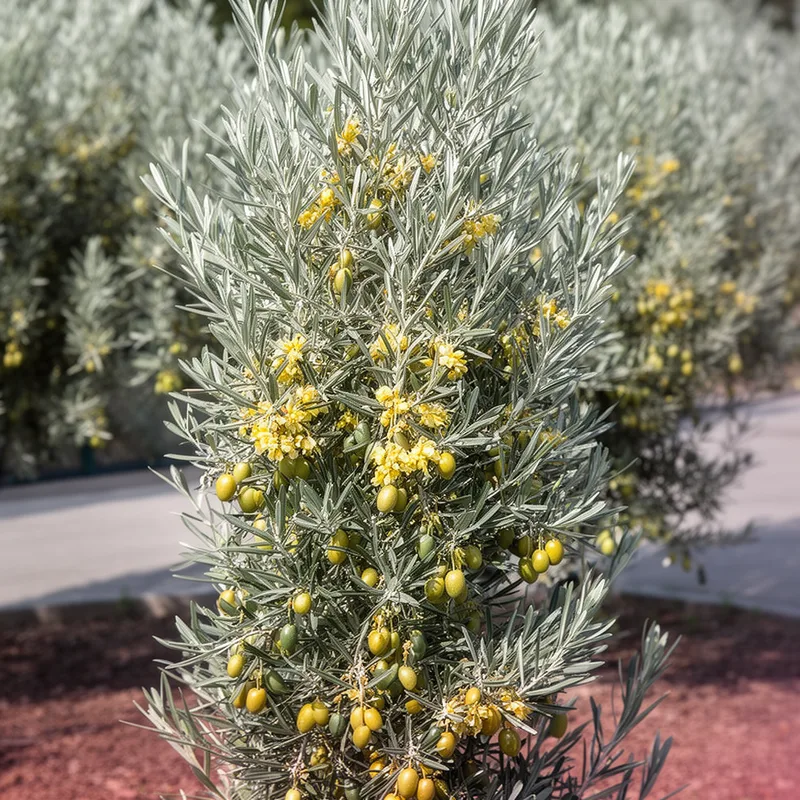
oleaster
- noun
- /oʊˈliːəstər/
- We planted an oleaster near the driveway because of its hardiness and attractive foliage.
Examples
-
The garden was bordered by a row of oleaster shrubs, their silvery leaves shimmering in the sun.
-
The oleaster thrives in poor soil conditions.
-
Some birds are attracted to the olivelike fruits produced by the oleaster.
-
I planted an oleaster in my garden last spring.
-
The oleaster produces small fruit that can be eaten or used in jams.
-
In the garden, the oleaster stands out with its silvery leaves and bright yellow flowers.
-
Many birds are attracted to the oleaster, which provides them with shelter and food.
Synonyms
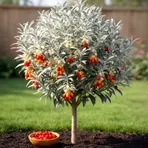
A shrub or small tree with silvery leaves and small edible berries
Compounds

- Specialized
A group of shrubs and small trees often with silvery leaves and spiny branches like the Russian olive
Surface Forms
Morphology
oleaster = olive (opaque) = olea + aster
Although formed from the root corresponding to 'olive' plus the suffix '-aster', the relationship and the suffix's nuance are not clear to average learners and do not transparently yield 'a shrub of the genus Elaeagnus'.
Etymology
The word oleaster comes from the Latin olea meaning 'olive' and the ending -aster meaning 'resembling' or 'not a real one'. So an oleaster is an 'olive-like' shrub, which explains why its small fruits and silvery leaves look like those of an olive.

