

old wives' tale
 9
5.7
9
5.7

- noun
- /oʊld waɪvz teɪl/
- The problem is a few people (like yourself) refuse to evolve past the old wives' tales and failed policies of 1933.
- just an old wives' tale
- believe in the old wives' tale
- telling an old wives' tale
Examples
-
It's an old wives' tale, right?
-
"You don't believe that old wives' tale, do you?" he said in his scientist voice.
Fiction book (1994) -
Well... I see no reason to put stock into an old wives' tale.
-
I do not subscribe to old wives' tales.
-
That's an old wives' tale.
-
We also learn that it's an old wives' tale that cats suck the breath from babies.
Fiction book (1999) -
Queenie was always ironing, watching Search for Tomorrow, and Mother Dear would be telling Sister one old wives' tale after another.
Fiction book (1990) -
The ease, the casualness with which she spoke of my child irritated me, as it always does when old people spread their know-it-all old wives' tales.
Fiction book (1997) -
I remembered that old wives' tale about the stained sheets—how would I explain them to Greg the next morning?
Fiction book (1995) -
There's an old wives' tale that claims the more acorns there are, the harder the winter.
Synonyms
 52
6.1
52
6.1
Knowledge and stories that people pass down over generations
 43
4.9
43
4.9
Traditional stories, customs, and beliefs people pass down through generations
 8
3.4
8
3.4
A traditional story told by people in a community that often teaches a lesson
 6
2.7
6
2.7
An old story that people tell to each other in a community
 1
3.9
1
3.9
Traditional stories people tell to explain past events or cultural beliefs, often not true


 1
5.5
1
5.5
A made up story told to hide the truth
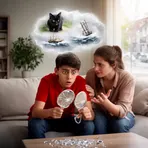
An untrue belief about luck or danger that people accept without proof
Antonyms

How Credible
- Specialized
15
4.2
 1
3.6
9
5.7
1
3.6
9
5.7
- Literature
19
4.0
Surface Forms
Morphology
The meaning can be partly inferred from the parts: 'old' + 'wives' + 'tale' yields an old story associated with (older) women, which signals a traditional or folk belief. However, the negative evaluative sense (that it is unscientific or superstitious) and the cultural/idiomatic nuance of dismissing such beliefs are not fully predictable from the constituents alone, so learners may need exposure to the idiomatic use.
Etymology
Old wives' tale may come from the simple image of older women telling short stories or home advice, where wives means 'women' and tale means 'story'. Because these stories were passed by word of mouth and often not checked, the phrase came to mean 'an unscientific belief'.