

old caboose


 1
9.1
1
9.1
- noun
- /oʊld kəˈbuːs/
- Archaic
- They restored an old caboose for the museum.
Examples
-
The old caboose was converted into a cozy reading nook at the library.
-
The train ended with an old caboose.
-
Photographers often find inspiration in the weathered paint and rusty wheels of an old caboose.
-
The children explored the old caboose that had been restored at the railway museum.
-
The old caboose at the end of the train was once used as the crew's living quarters.
-
They restored an old caboose and converted it into a cozy office for the train company.
-
After the last freight car, the vintage old caboose added charm to the stationary train.
Synonyms
 6
2.5
6
2.5
A vehicle on railway tracks that carries people or goods
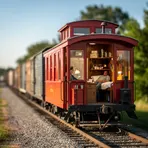 5
8.6
5
8.6
A small car at the end of a freight train where the crew live or work
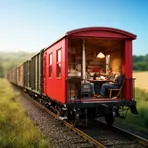
A car at the end of a freight train where the crew rest
Surface Forms
Morphology
The meaning 'the last car attached to a freight train' is directly and transparently derived from 'old' (not new) modifying 'caboose' (rail car used as crew quarters), so a B1 learner who knows both words can infer it. This is a straightforward adjective + noun composition following standard English noun-phrase semantics, making the expression immediately comprehensible.
Etymology
The term old caboose comes from the small cabin at the back of a freight train called a caboose, where the crew slept or worked. Because that 'last car' was often left outside and became worn, many were later turned into 'reading nooks' or 'museum pieces', so an old caboose today is the worn last train car often reused or kept as an interesting object.