

oil of turpentine
- noun
- /ɔɪl əv ˈtɜr.pənˌtaɪn/
- Specialized
 :
aceite de trementina
:
aceite de trementina
- The smell of oil of turpentine filled the studio as she cleaned her brushes.
Examples
-
In the past, oil of turpentine was sometimes prescribed in small doses for medicinal purposes.
-
I bought some oil of turpentine for my painting project.
-
Artists traditionally use oil of turpentine to thin oil paints for smoother brushwork.
-
The oil of turpentine worked well as a solvent.
-
He used oil of turpentine as a solvent to clean the paintbrush after finishing his artwork.
-
In her art class, the teacher explained that oil of turpentine can thin oil paints and restore their fluidity.
-
The label on the can warned that oil of turpentine should be used in a well-ventilated area due to its strong fumes.
Synonyms

 13
7.5
13
7.5

An oily liquid from pine trees that thins paint and cleans brushes

A strong liquid used to thin oil paint and clean brushes

A strong liquid used to thin oil paint and clean brushes

A strong liquid painters use to clean brushes after painting with oil
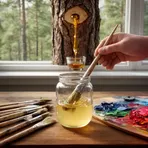
A sticky liquid from pine trees used to thin paint and clean brushes
Surface Forms
Morphology
oil + of + turpentine
The phrase is a straightforward compositional noun phrase: 'oil' produced from or associated with 'turpentine' (the preposition 'of' marks source/material). A B1 learner who knows both constituent words can readily infer it denotes the liquid solvent/paint thinner derived from turpentine; this source-of construction is common across languages, supporting full transparency.
Etymology
Oil of turpentine comes from a strong-smelling oil made from the sticky sap of pine trees, called turpentine. Artists used this oil to thin 'oil' paint and clean brushes, so that's why the phrase means the liquid painters use to thin and clean oil paints.