

gum turpentine
- noun
- /ɡʌm ˈtɜr.pən.taɪn/
- Specialized
- Some varnishes contain gum turpentine to improve their flow and drying properties.
Examples
-
I bought some gum turpentine for my painting supplies.
-
The painters used gum turpentine to thin their oil paints and clean their brushes.
-
Extraction of gum turpentine is a major industry in some forested regions.
-
The gum turpentine is used in many varnishes.
-
The artist used gum turpentine as a solvent for thinning his oil paints.
-
When working with varnishes, many craftsmen rely on gum turpentine for its excellent properties.
-
To clean the brushes, she soaked them in gum turpentine after using oil-based paints.
Synonyms

 13
7.5
13
7.5

An oily liquid from pine trees that thins paint and cleans brushes
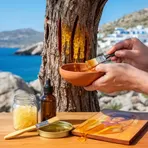
A sticky tree resin from the island of Chios used in medicine and to make varnish

A strong liquid used to thin oil paint and clean brushes

A strong-smelling liquid from pine resin that artists use to thin oil paint

A strong liquid used to thin oil paint and clean brushes

A strong liquid painters use to clean brushes after painting with oil
Surface Forms
Morphology
The meaning is directly inferable from combining 'gum' (tree resin) with 'turpentine' (a solvent/oil): it denotes turpentine derived from gum/oleoresin. This is a regular noun–noun composition (source/material + product) common cross-linguistically, so a B1 learner who knows both constituents should be able to understand it, despite the term's technical register.
Etymology
Gum turpentine comes from the sticky gum, a kind of tree sap that runs from pine trees, and the strong-smelling oil 'turpentine' that is made from that sap. Because painters used this liquid to 'thin' paint and clean brushes, the name came to mean the fluid from pines used as a 'solvent'.